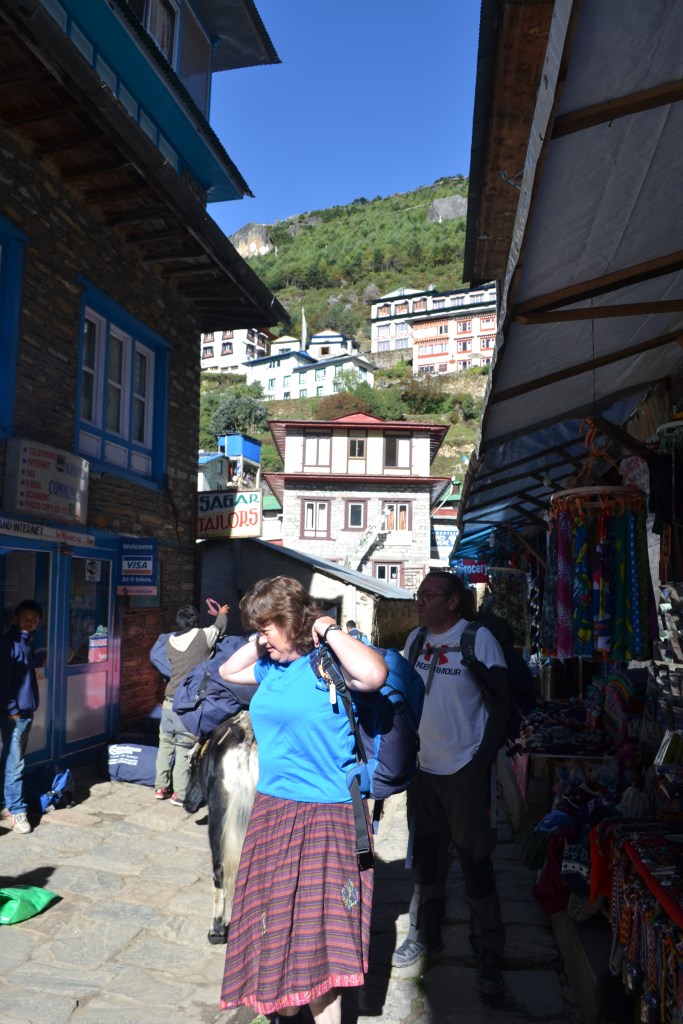
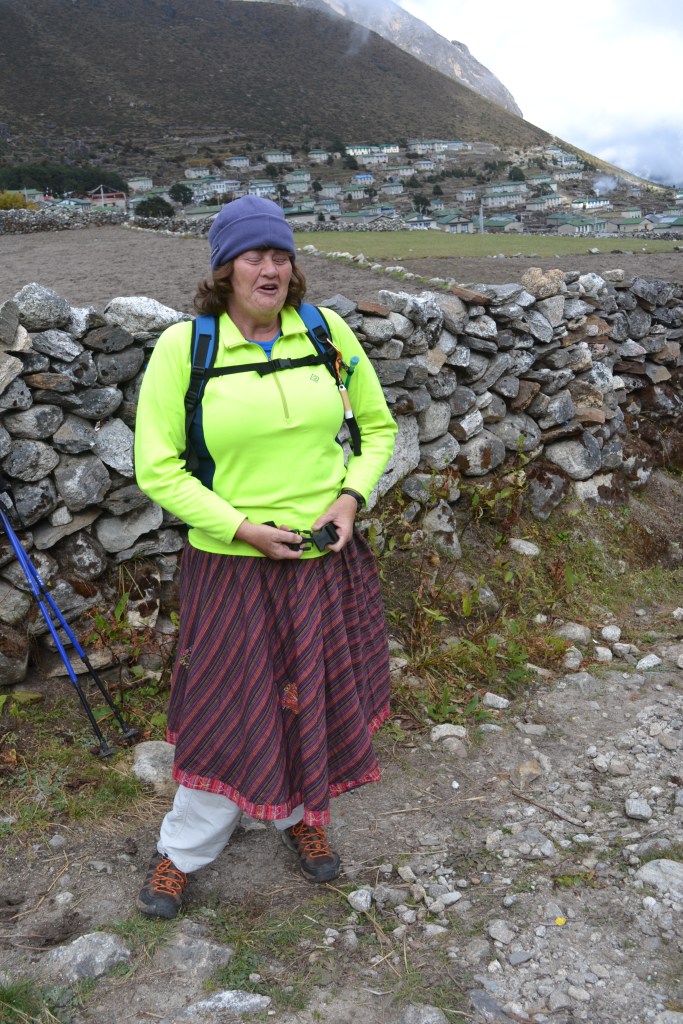
The locals were very impressed by Mary who was wearing a skirt. I think she bought this in Kathmandu. She was the only trekker we saw wearing one. By this time I had covered up my legs by donning my long trousers.
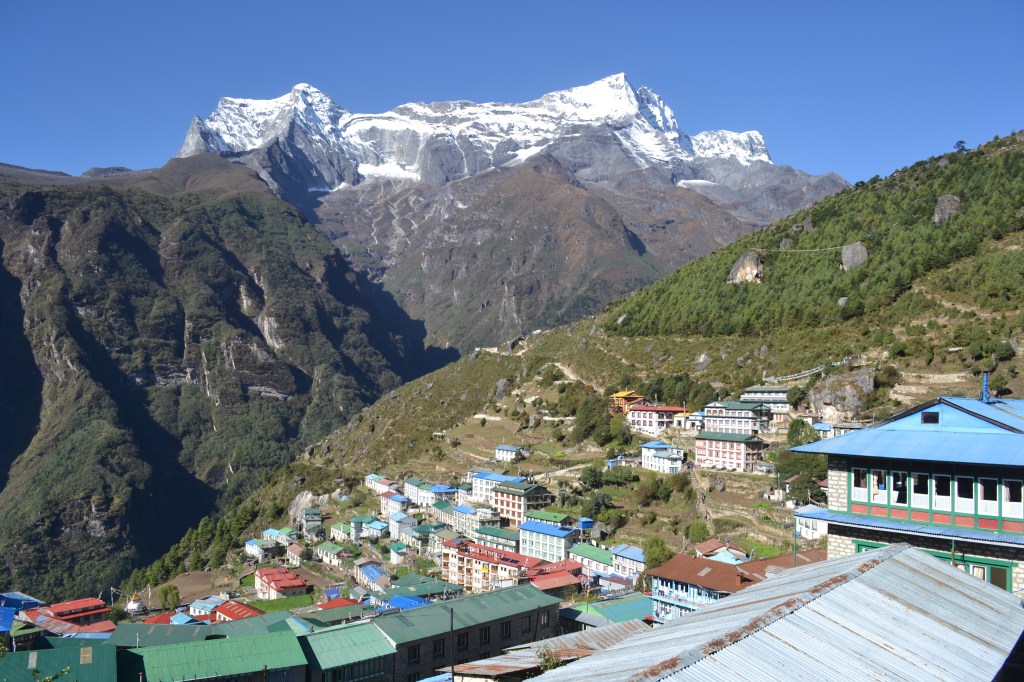
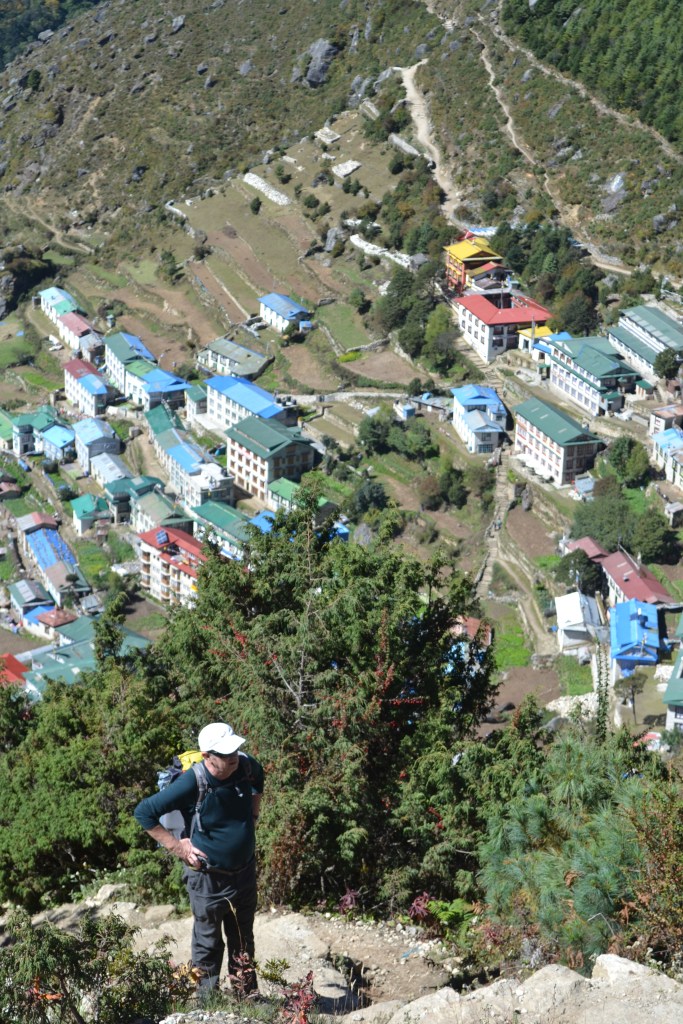
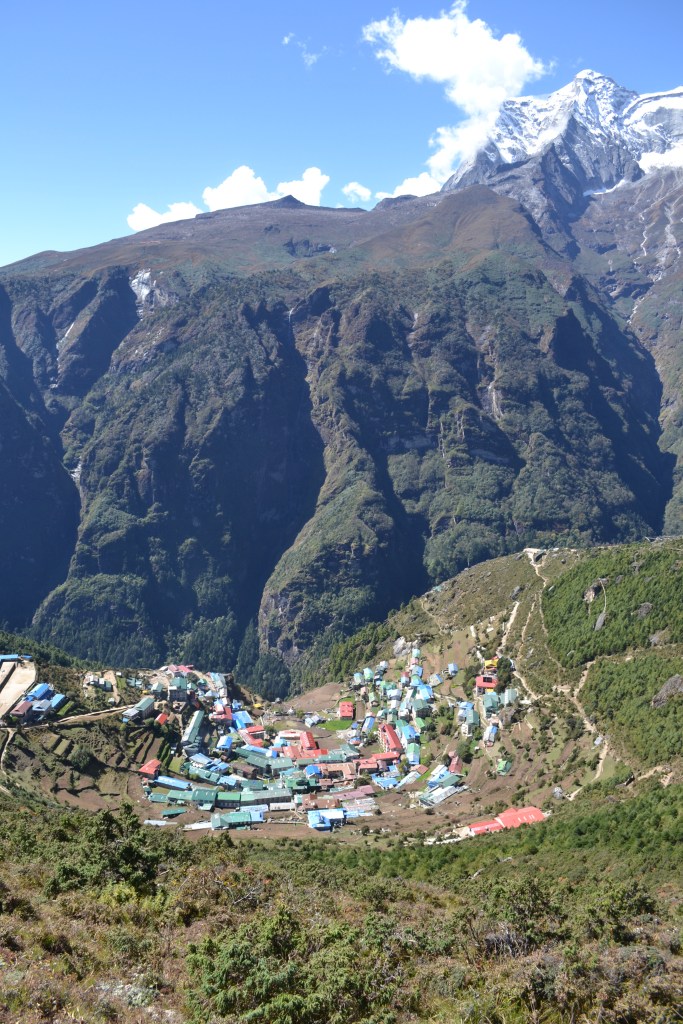
Namche had everything the novice (and also serious) climber could want. Ropes, ice axes, medicine, souvenirs, “North Face” kit etc. etc. We looked around the shops a bit and then started to climb out of the town.
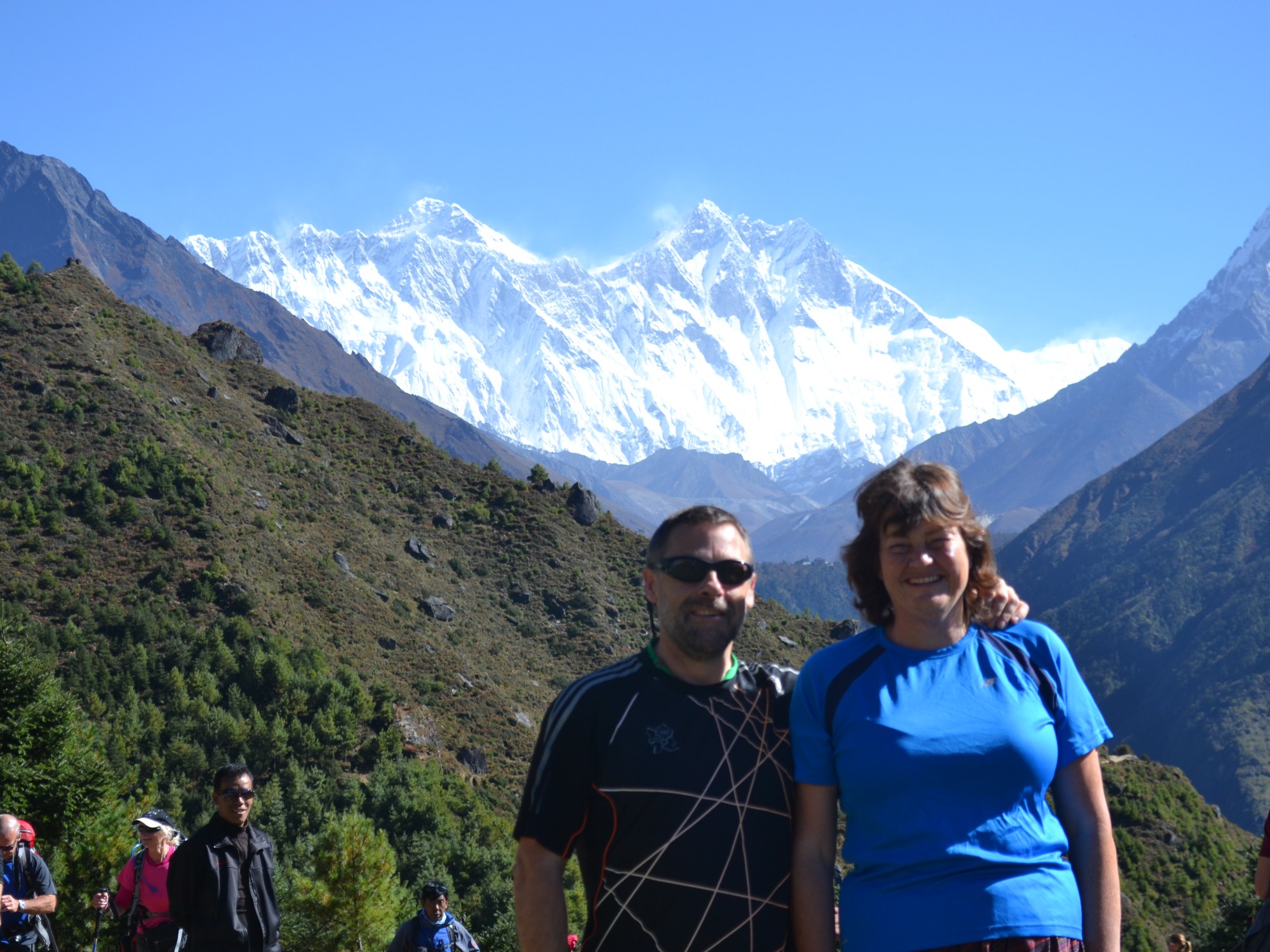
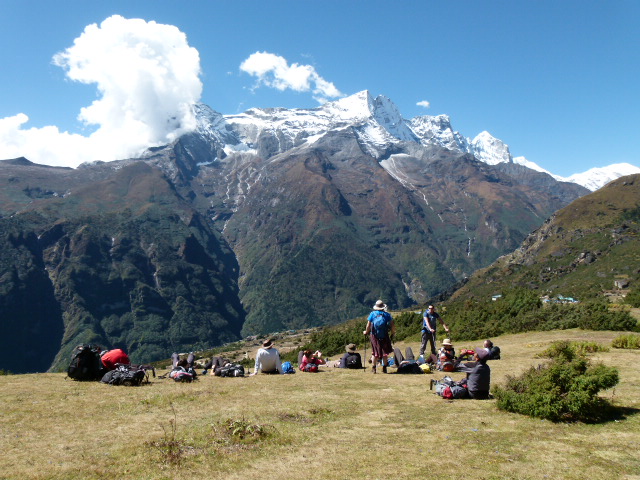
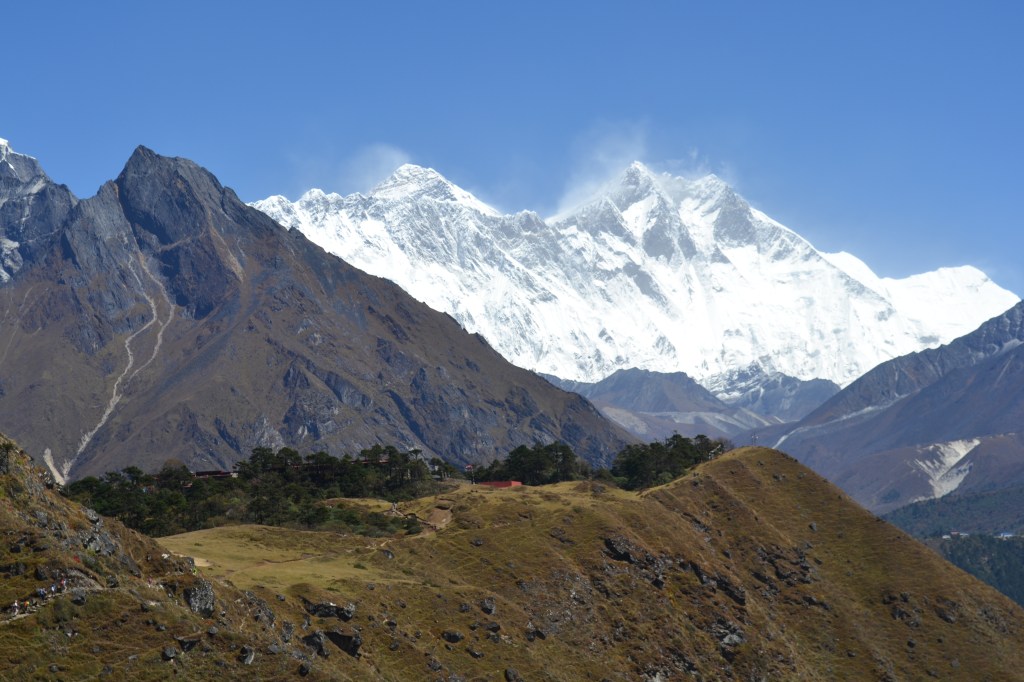
We were guided up to a meadow where we got our first view of our goal – Everest!
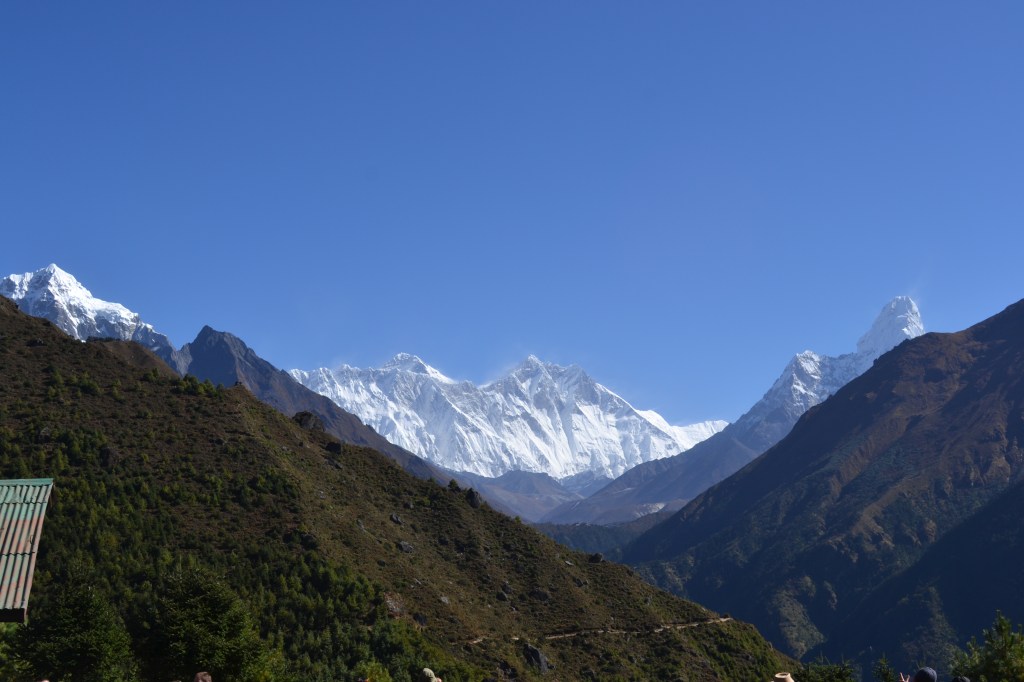
For those of you uncertain about which one is the highest mountain in the world – here’s the same photo with a useful arrow.
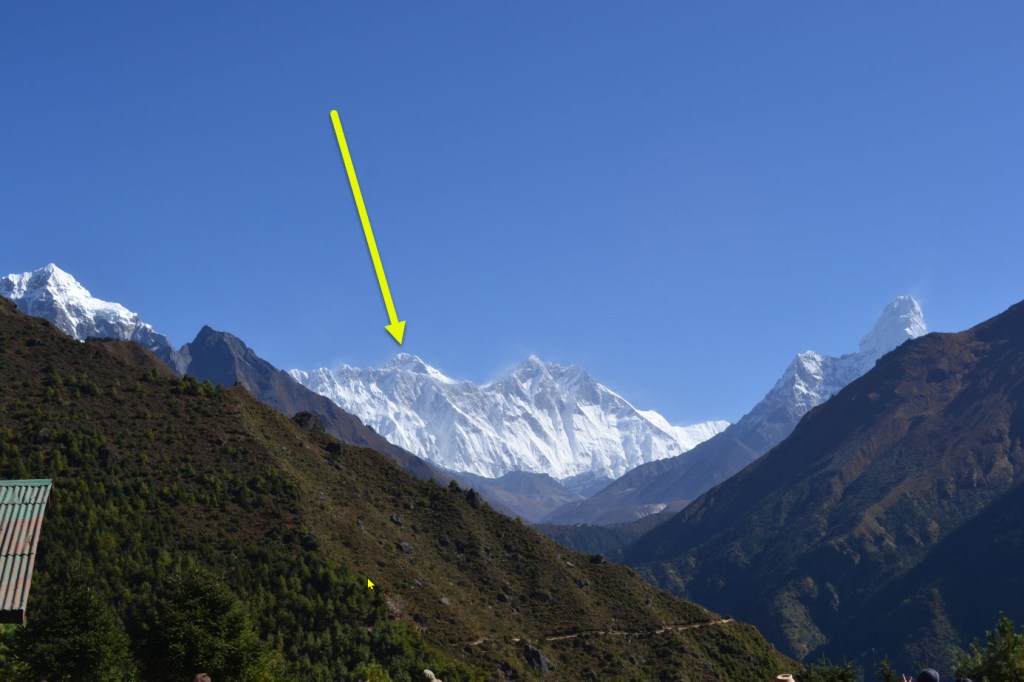
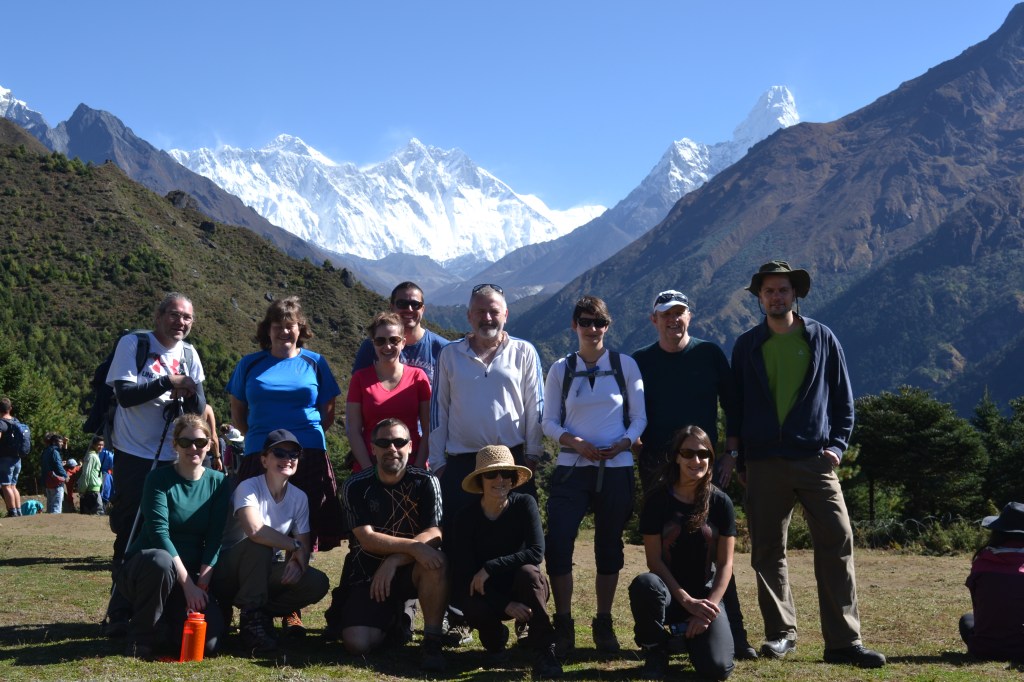
Still 13 of us and still smiling.
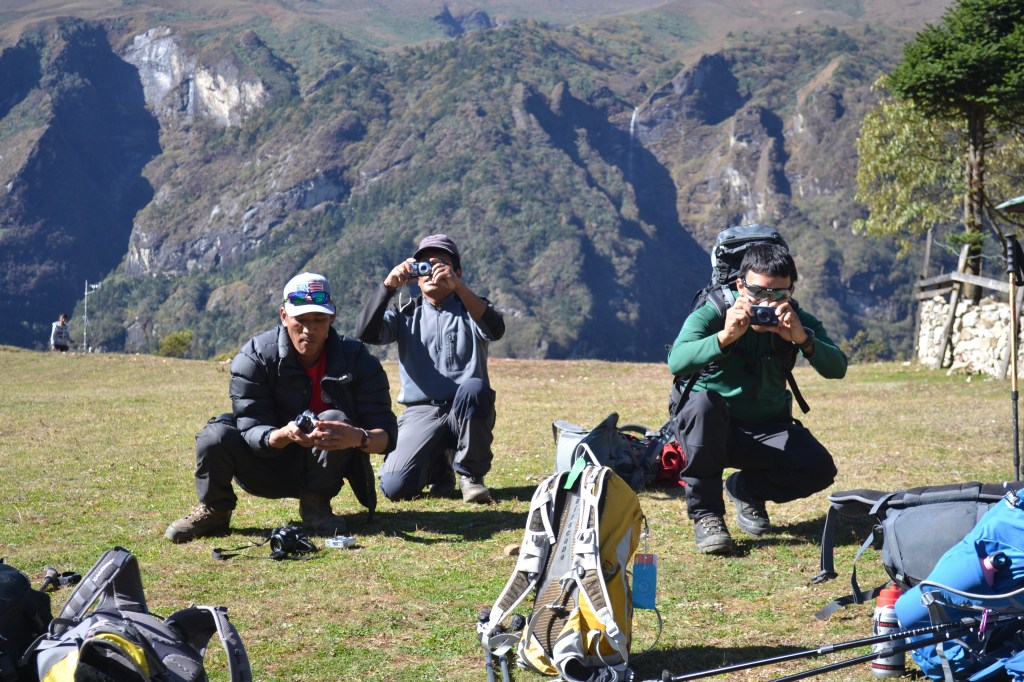
Here are our guides with an array of our cameras and phones taking the iconic group picture.
From here we climbed up an incredibly steep path taking us high above Namche.
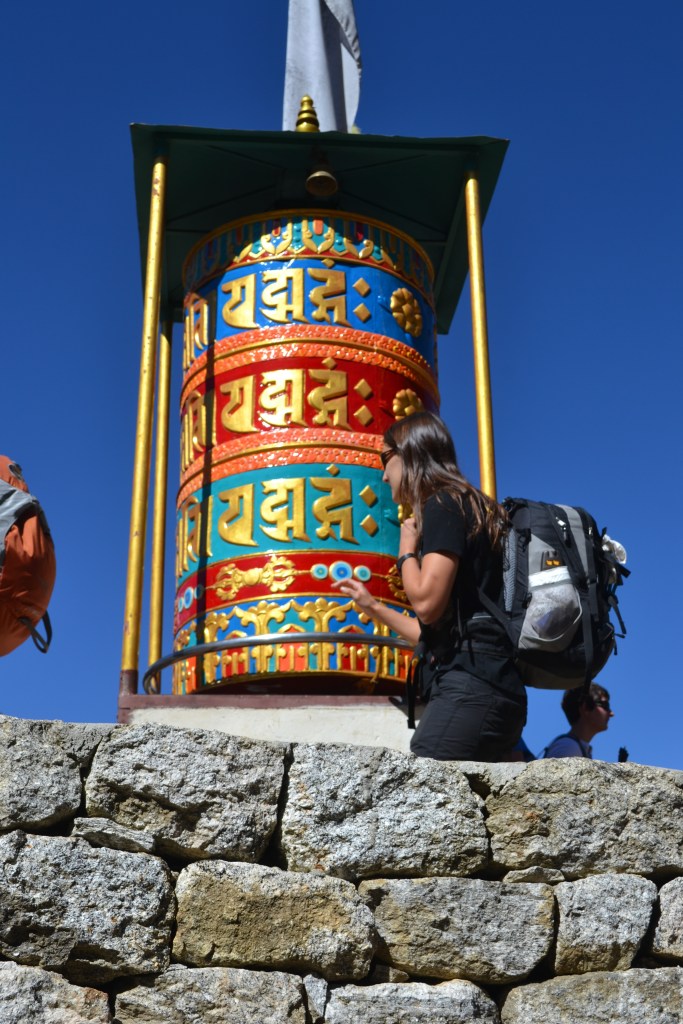
We continued along this ridge towards the red-roofed Everest View Hotel (how do they come up with these original names?). It was Japanese-built in 1971 and is actually rather posh. Named – incorrectly I feel – as the world’s highest hotel in the Guinness Book of Records, it stands at 13,000ft. Many tourists unwisely are helicoptered straight to the hotel from Kathmandu and instantly get altitude sickness and have to descend. We took off our boots and shuffled through the reception area to a verandah where we drank (relatively expensive) mango juice and admired the view.
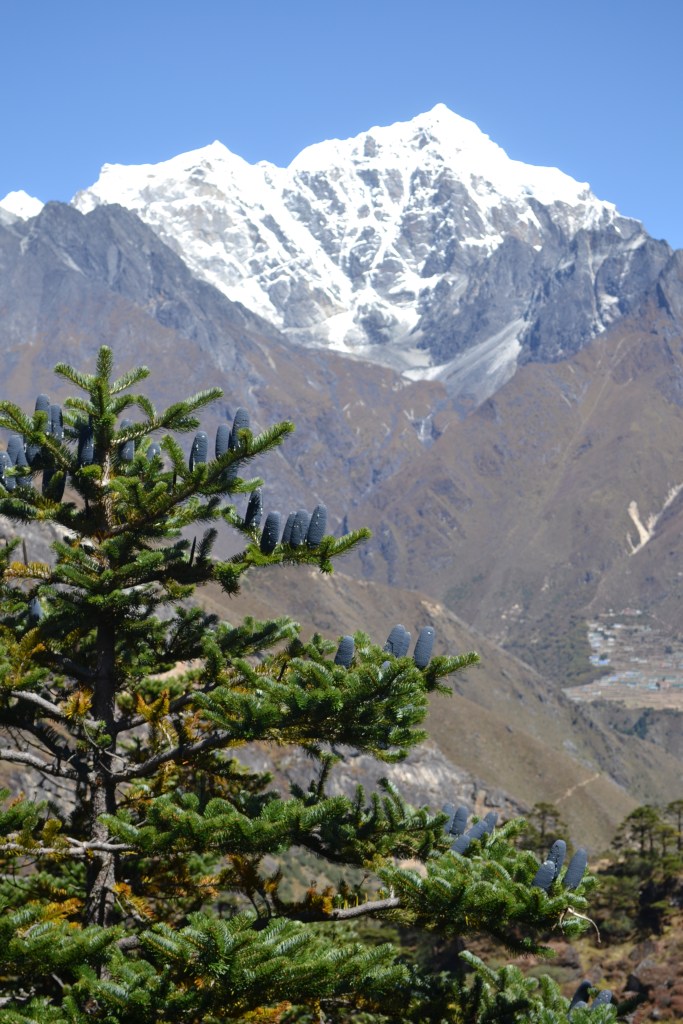
Then we headed down through a delightful wood to the village of Khumjung.
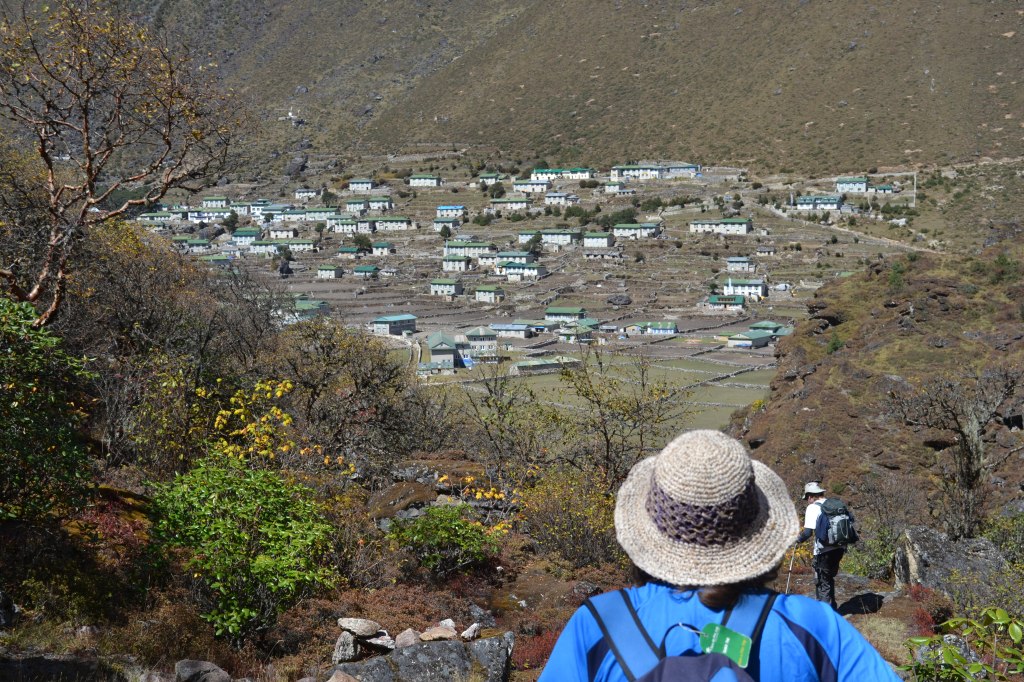
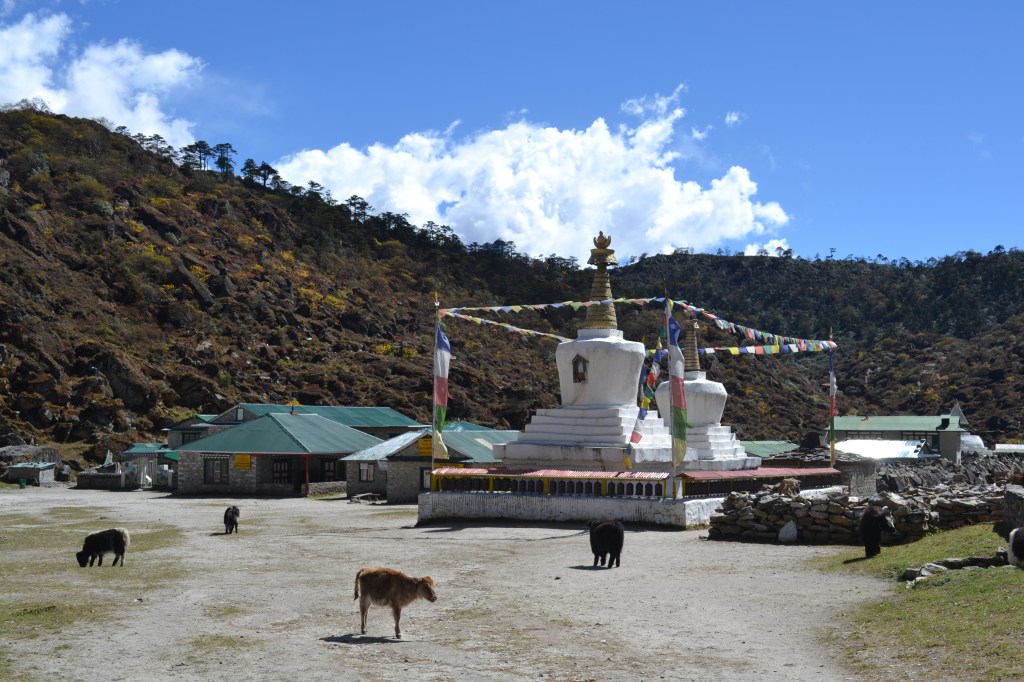
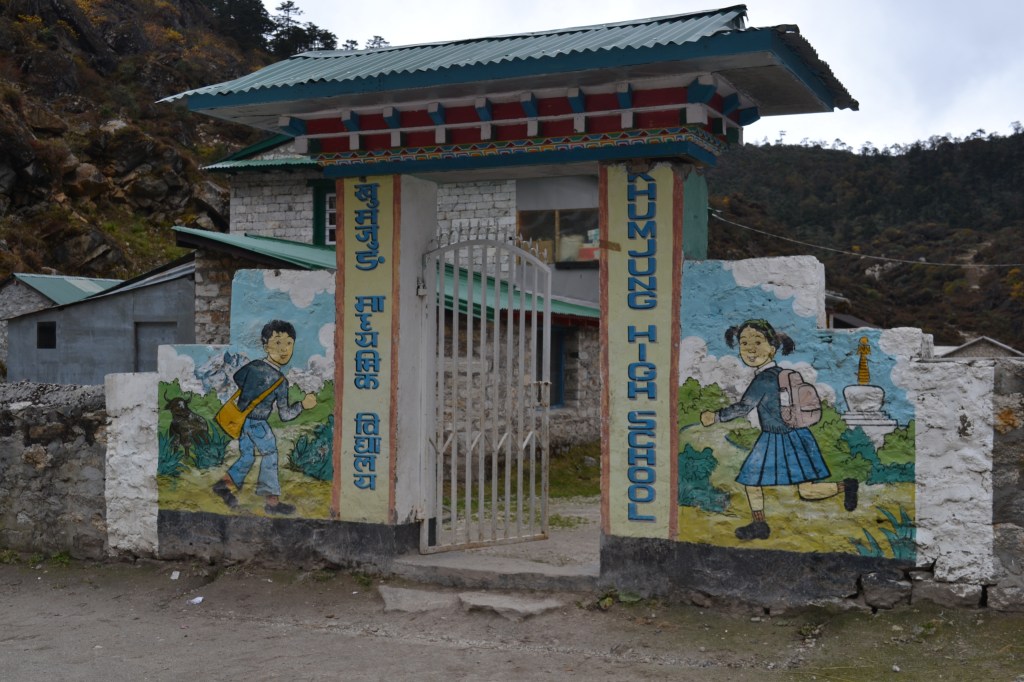
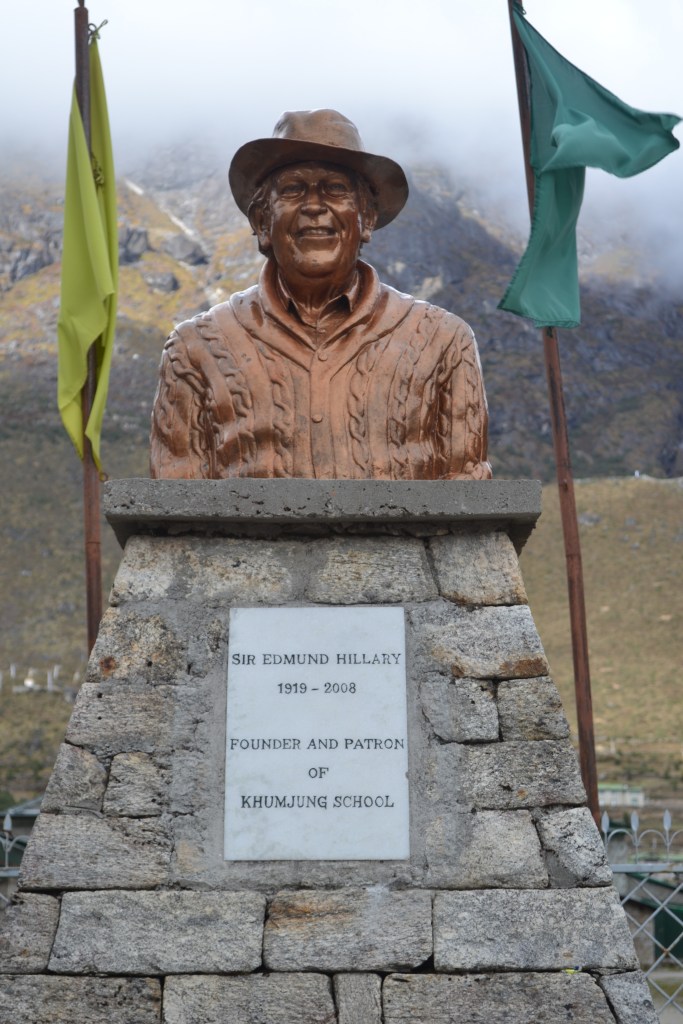
Sir Edmund Hillary is something of a deity in these parts. Of course, it was him and his team who put this region on the map. For the rest of his life, after his famous ascent in 1953 he returned to this region and raised funds for buildings and projects to help the people of Nepal.
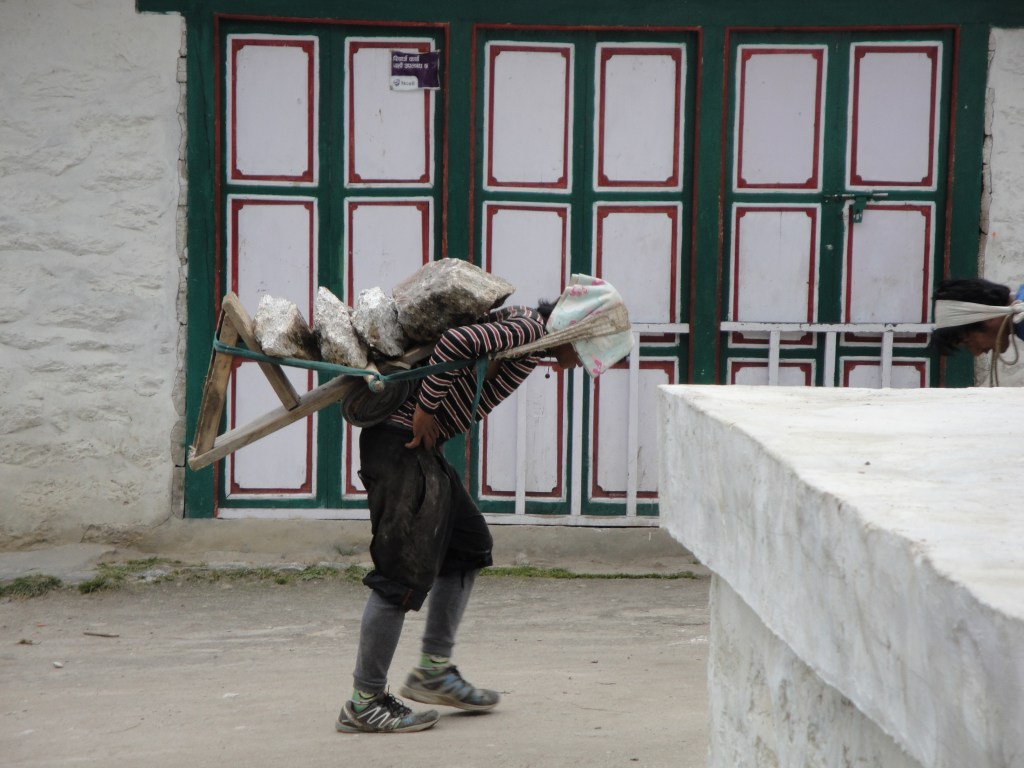
One thing he could have funded (but didn’t) was a fork-lift truck to help this porter who was bent double carrying rocks.
As previously mentioned, everyone voted Mary “Most Fashionable Trekker 2013”. Here she is with fluorescent top, skirt and trousers – a look heading for Milan and Paris this season.
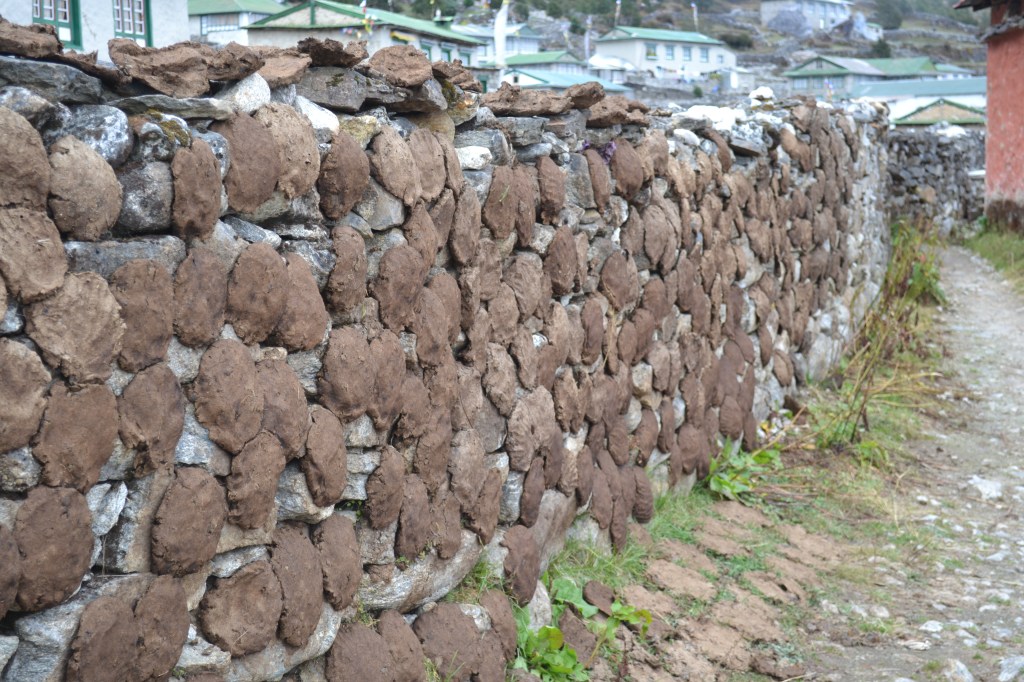
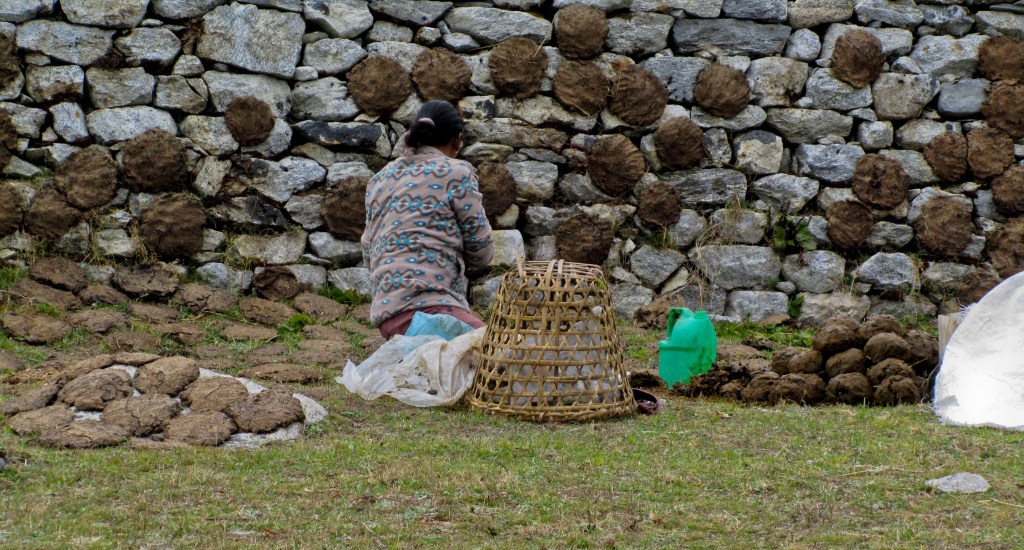
At first we were puzzled by these rounds of mud on the walls of the village. Then we were told they were formed from yak dung. It dries in the sun and is then used as fuel to heat the homes. We’re thinking of trying the same with our dog, Pickle.
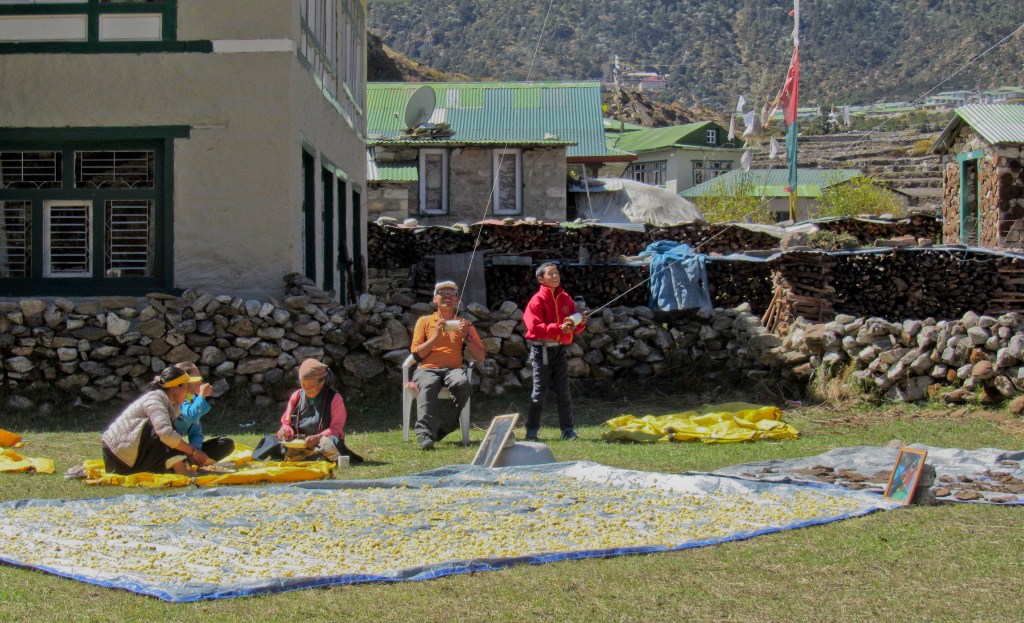
I’m not sure what crop was drying in the sun here, but while it was drying the locals flew kites for entertainment.
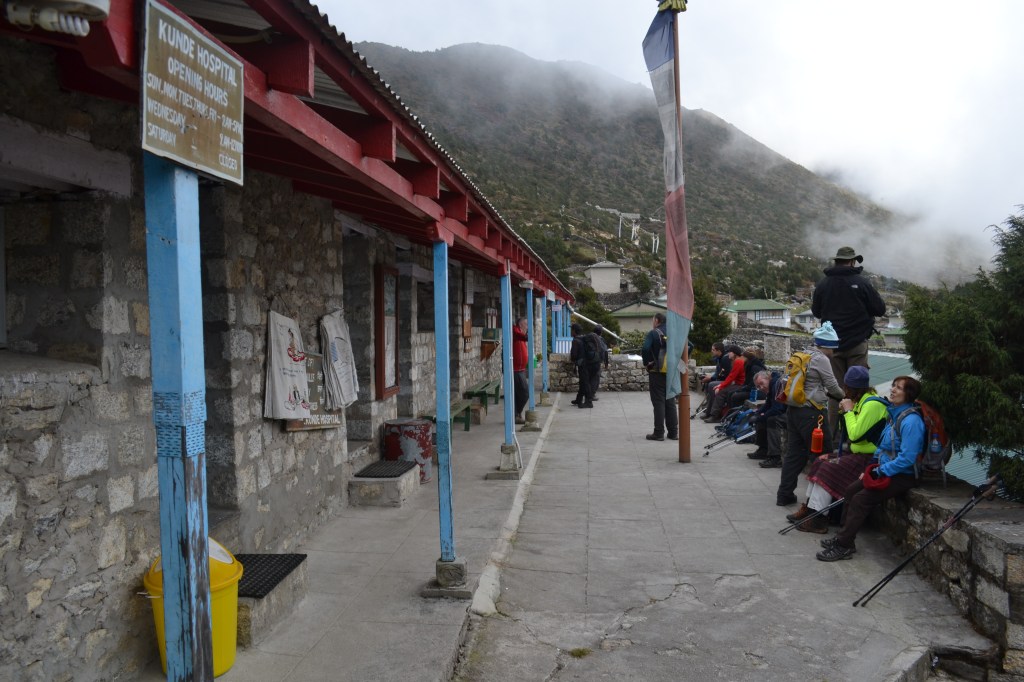
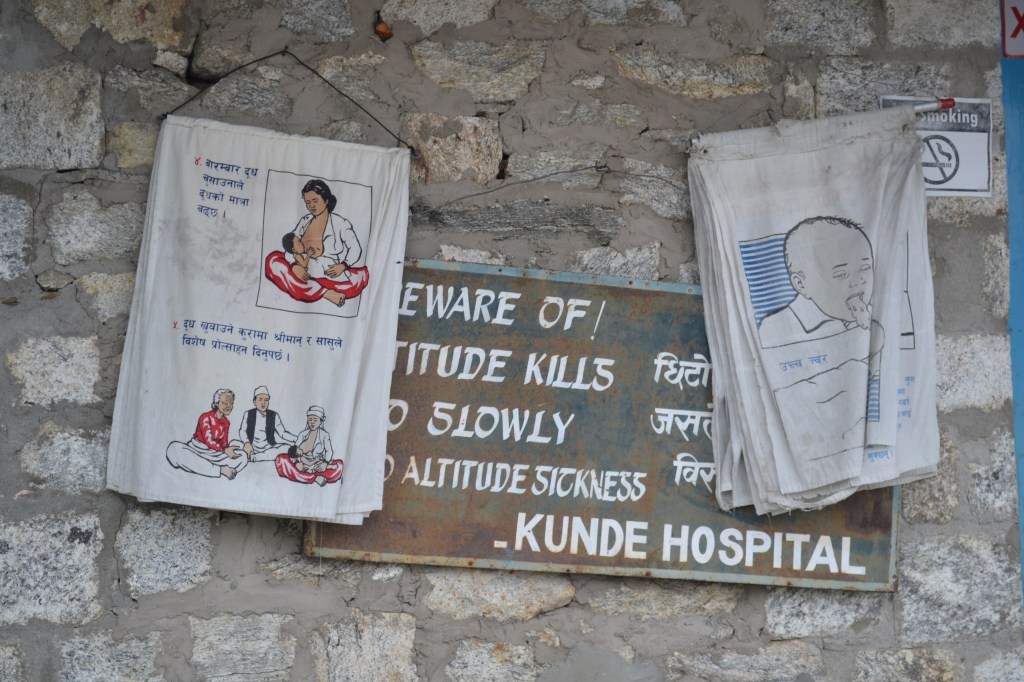
Khunde hospital (of course founded by Sir Edmund, in 1966) is the only hospital in the whole region. People walk for days and days to come here if they are ill. They also run clinics in many of the remote Himalayan villages around here. When we visited the hospital there were no in-patients. They have a single ward with 4 beds.
Here is the consulting room where we had a really interesting chat with Dr Kami Temba, who has been at the hospital since 1979. At first he worked as a volunteer and then was sponsored to go to medical school in Fiji in 1996. He was closely quizzed by Michelle – our resident anaesthetist – who was amazed at the work they do here with virtually no modern equipment. They have revolutionised healthcare for 8,000 locals in the mountains around here.
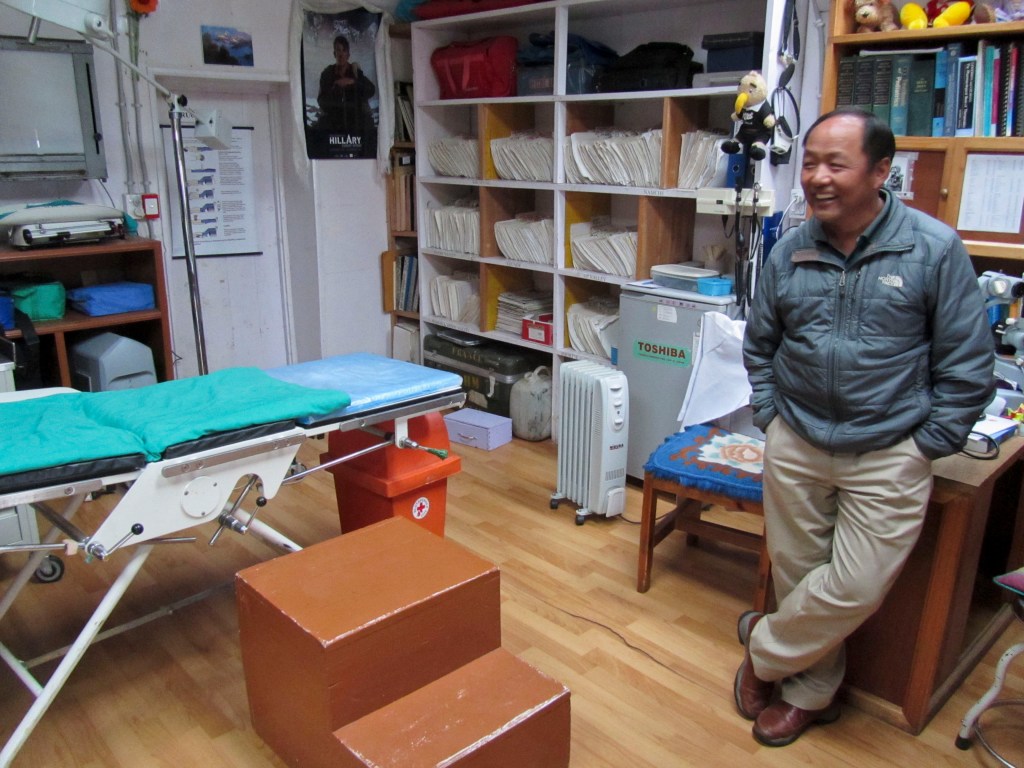
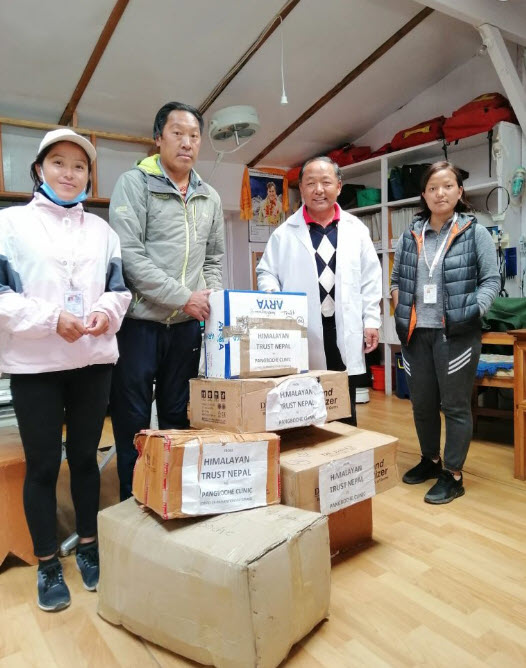
Interestingly, while researching this blog I found this recent photo of Dr Kami receiving vital supplies of PPE to help tackle Covid-19 this year. The consulting room does not seem to have changed much.
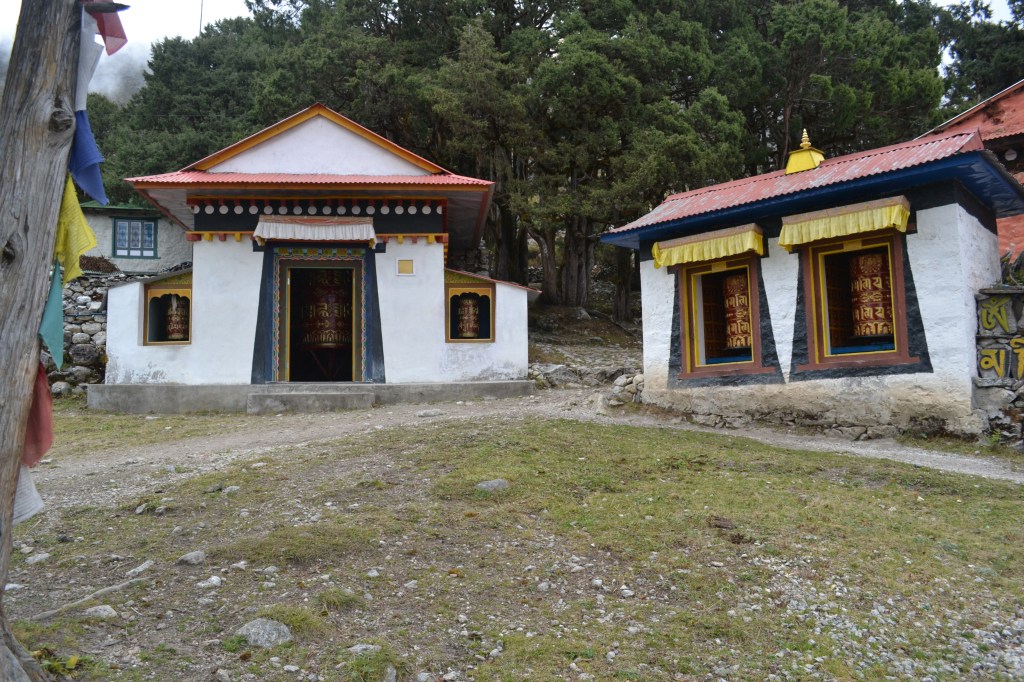
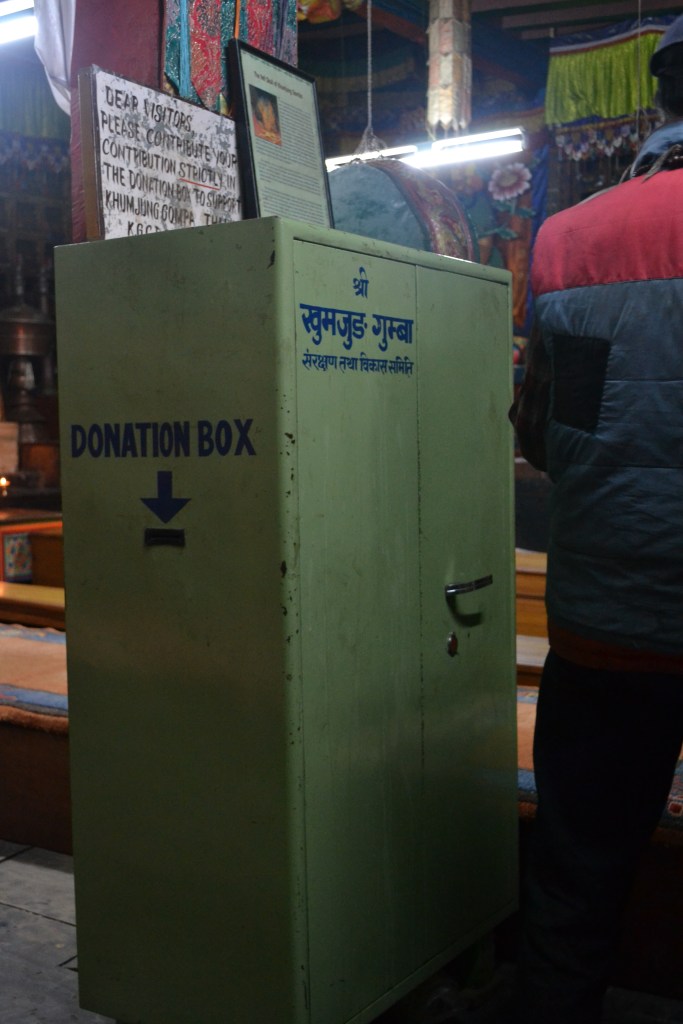
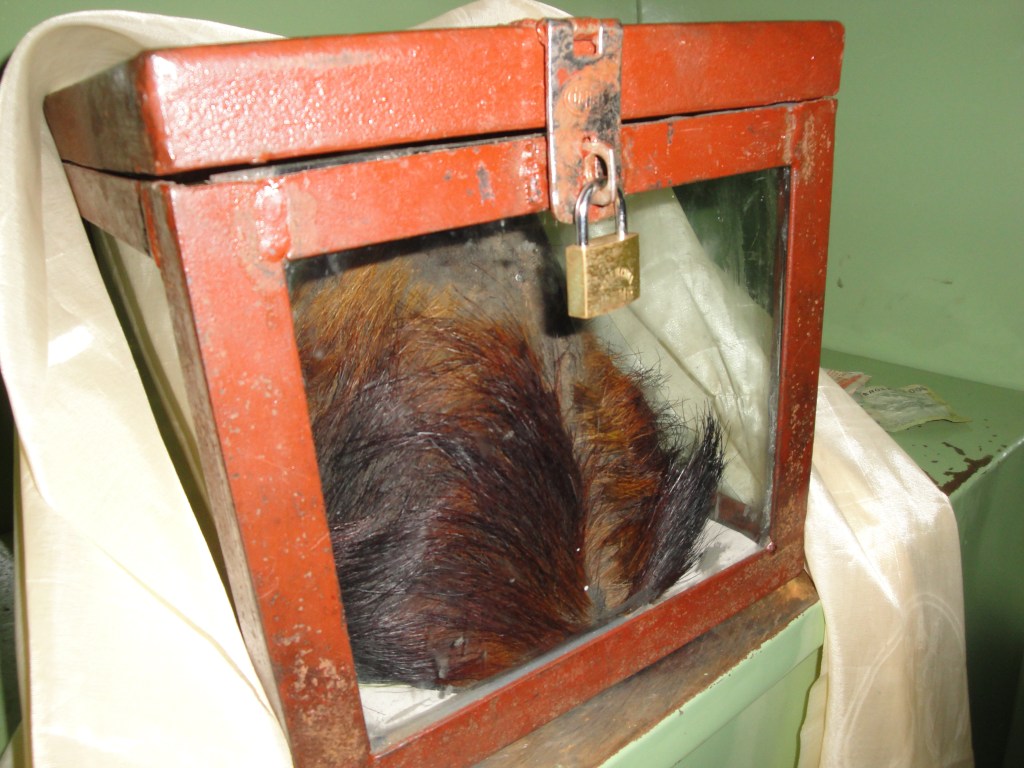
We left Khunde and gently dropped down towards our next tea house (local name for a guest house). On the way we passed the Khumjung monastery and were invited inside to see their prized possession – a yeti skull. From a real yeti!
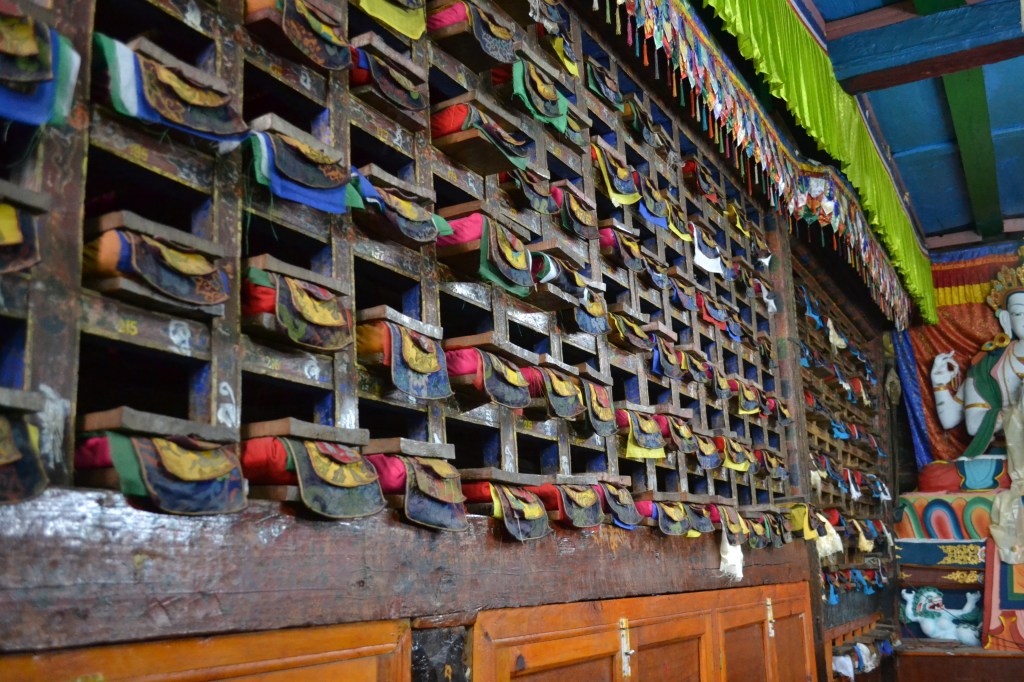
Now, this yeti skull is a nice little earner for Khumjung monastery. It is locked inside a green cabinet, and for a donation the cabinet is opened and the skull revealed.
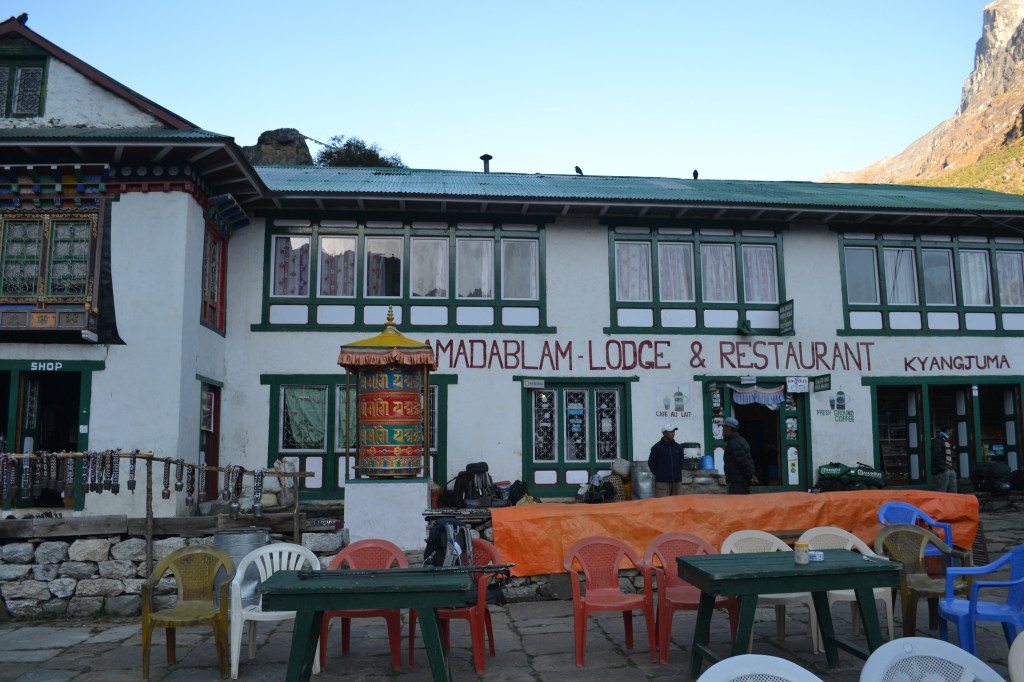
It had been quite a day – as we arrived at the Amadablam Lodge it was already in shade and the temperature was rapidly falling.
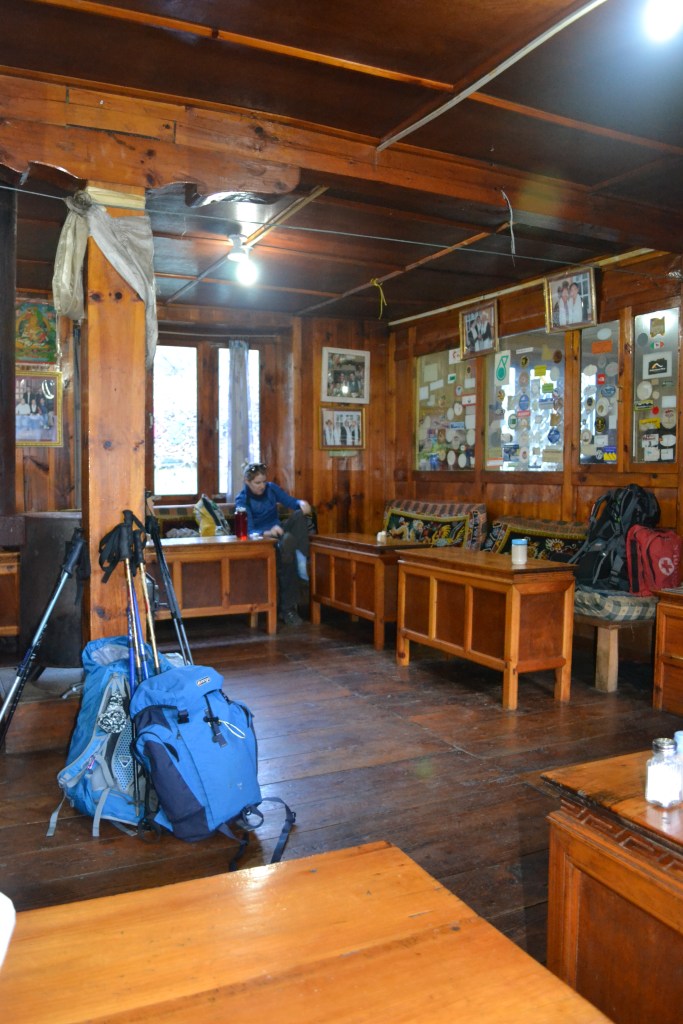
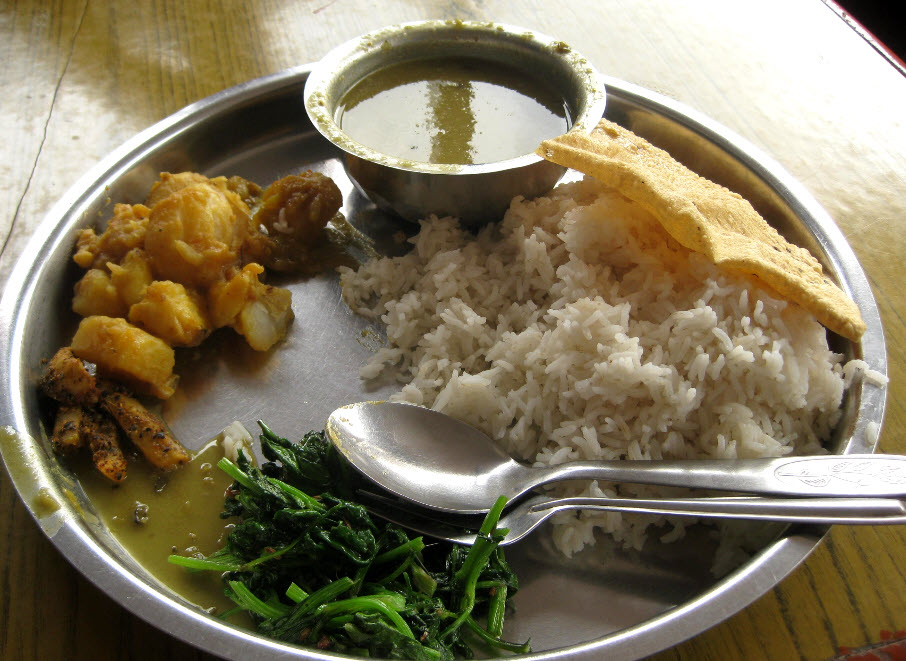
This is the inside of a typical tea house. A single communal room with a stove in the middle fuelled – very effectively – by yak dung. On arrival our first job was to order our evening meal. We soon learned that ordering the same meal for all of us made the life of the cooks much easier and meant we got our food sooner. There was a basic menu, mostly vegetarian. The main dishes were the ubiquitous Dal Bhat and fried rice.
Dal Bhat is the national dish of Nepal and most Nepalis eat it every day of their lives. It consists of a bowl of rice, some greens, a chutney and some pickled vegetables.
After three days of trekking we were getting to know each other and the evenings were becoming quite fun. One of the things Mary and I had packed in our (overweight) luggage was a pack of cards and Phil (the sea captain) taught us a simple game which he called “Stop the Bus”. Well, this was promptly renamed “Stop the Yak” and we played it every night for the rest of the trip. We had also taken “Pass the Pigs” and our porters absolutely loved it. We would often go to bed quite early but they stayed up late into the night playing it. Then in the morning they would present the game back to us in a very solemn way. On our last night we gave them Pass the Pigs and I like to think it is still being played in the region’s tea houses to this day.
For those of you who don’t know it is a game where you throw two little plastic pigs onto the table, and depending on how they fall you get points. Then you have another throw. But if they fall in a certain way you lose all your points and the next player has a turn. So, the secret is to know when to stop and bank your points. Well, the Sherpa people are obviously gamblers at heart because they never banked their points, they just went on and on until they lost. It was hilarious.
The Amadablam lodge had a fantastic position with a terrace looking up the valley towards our destination. We talked to the owner – a jolly lady in a Tibetan apron. We asked her what on earth she did in the winter and during the monsoon when there are virtually no trekkers. She told us she goes to America each year to visit her son!
 Everest Base Camp 2013