Today’s blog should have been titled “From One of the World’s 10 Worst Airports to the World’s Most Dangerous Airport – All in a Day” But that was too long.
But it does sum up the pessimism with which we ate our breakfast before getting in a minibus and being whisked (ha-ha – nobody is ‘whisked’ anywhere in Kathmandu) to the airport. When we arrived it was chaos. Or at least to us it seemed like chaos. The terminal was full of trekkers – all looking gloomy. Which airline were we flying with? We didn’t know. How did we check in? We didn’t know.
Adding to our nervousness was the fact that Mary and I had totally blown our weight allowance. Each of us had been issued with a big green Exodus travel bag which had looked fab at Heathrow. For the trek itself we had a very strict 10kg limit. As I recall our bags weighed in at 13kg each. 10kg didn’t seem very much for two weeks and we had over-packed. We also had rather a lot of Mars bars which we thought (correctly) would come in useful later on. We were braced to pay an excess weight fee which was a considerable amount of rupees per kg. The weight limit was important because a) the aircraft we were flying on was very small and b) the yak that was going to carry our bag for two weeks was very grumpy.
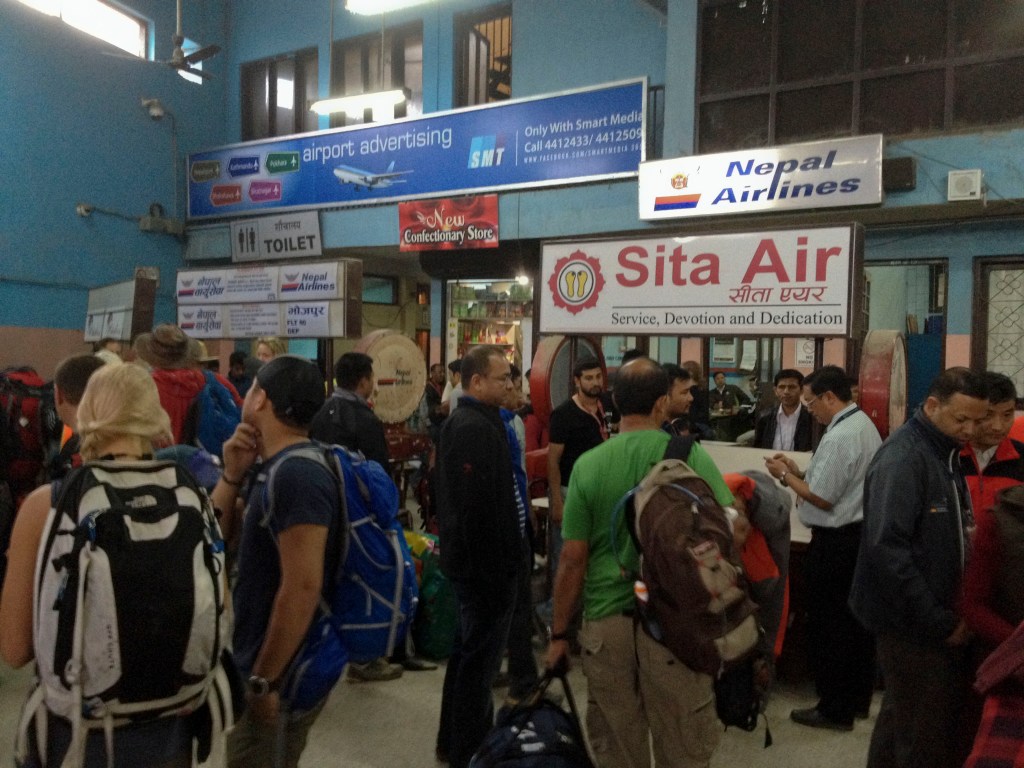
After just milling about for a couple of hours, not really knowing what was going on, our group of 13 trekkers (an auspicious number) was herded into a line. At the end of the line was a massive set of weighing scales. Here we go! However, with typical Nepalese efficiency all our bags were dumped on the scales together and nobody seemed to look at the needle which seemed to be off the scale – literally!
But we still didn’t have anything ‘normal’ like a boarding pass or ticket. And we still didn’t know if we were flying today. We then went through a non-functioning security scanner to another room which we assumed was the departure lounge and our spirits sank still further. It was crammed with trekkers, many with bloodshot eyes and newly-grown beards. These were the walking-dead who had been camping in the terminal for days. This would be us in three days’ time.
We only then learned about the rules of the game. What happens in this situation is we get to jump the queue! It works this way. If you have a flight time booked – as we did – then if that flight operates on time you get on it. It doesn’t matter that there are hundreds of other trekkers who have been waiting for days (because their flight was cancelled). Ok – should we get our hopes up? No – because the next piece of news we got was Lukla airport was still in cloud and therefore no flights were operating. So we started to wait.
And then suddenly it happened. Our flight was called – or at least someone shouted “Exodus group for Lukla. Get ready!”. We jumped up and tried to ignore the hundred jealous glares that followed us all the way from our seats to the bus. And then we were all on the bus – but where was our leader? He wasn’t on the bus with us.
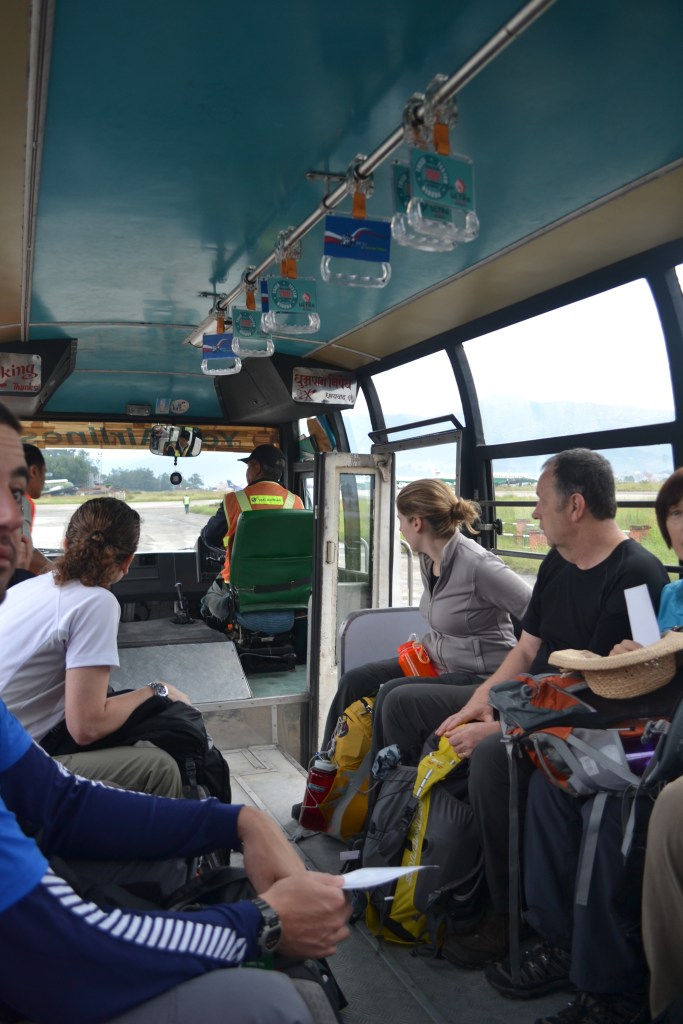
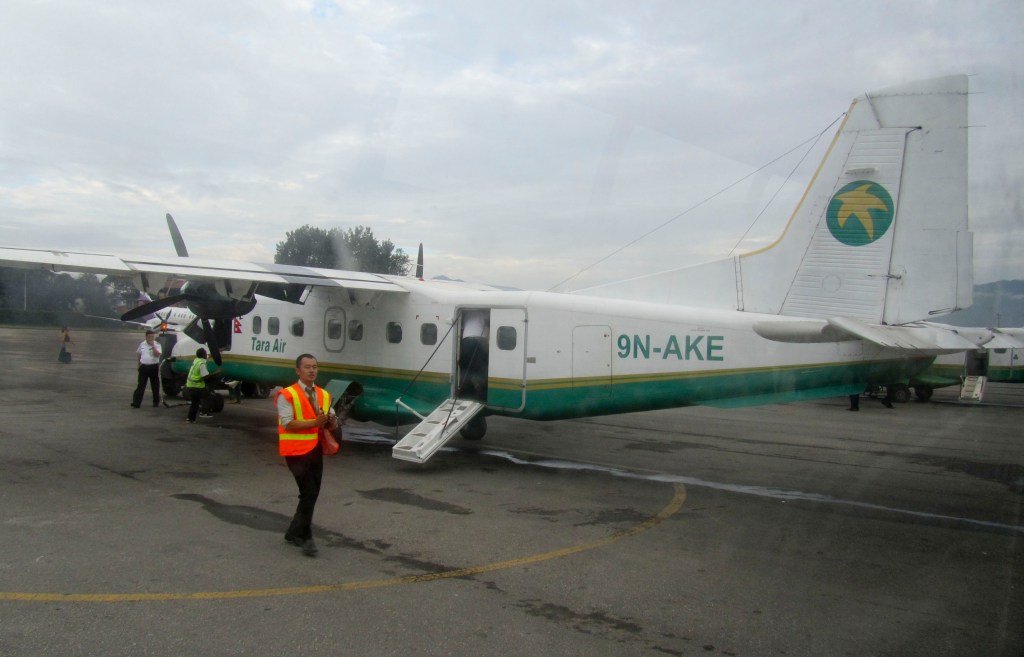
The bus took us to our plane – a Twin Otter. The airplane of choice for explorers worldwide. It was owned by Tara Air but excitingly it was operated by Yeti Airlines!
Once on the plane we were impressed by the easy access we had to the pilot – just in case we wanted to ask him anything on the flight.
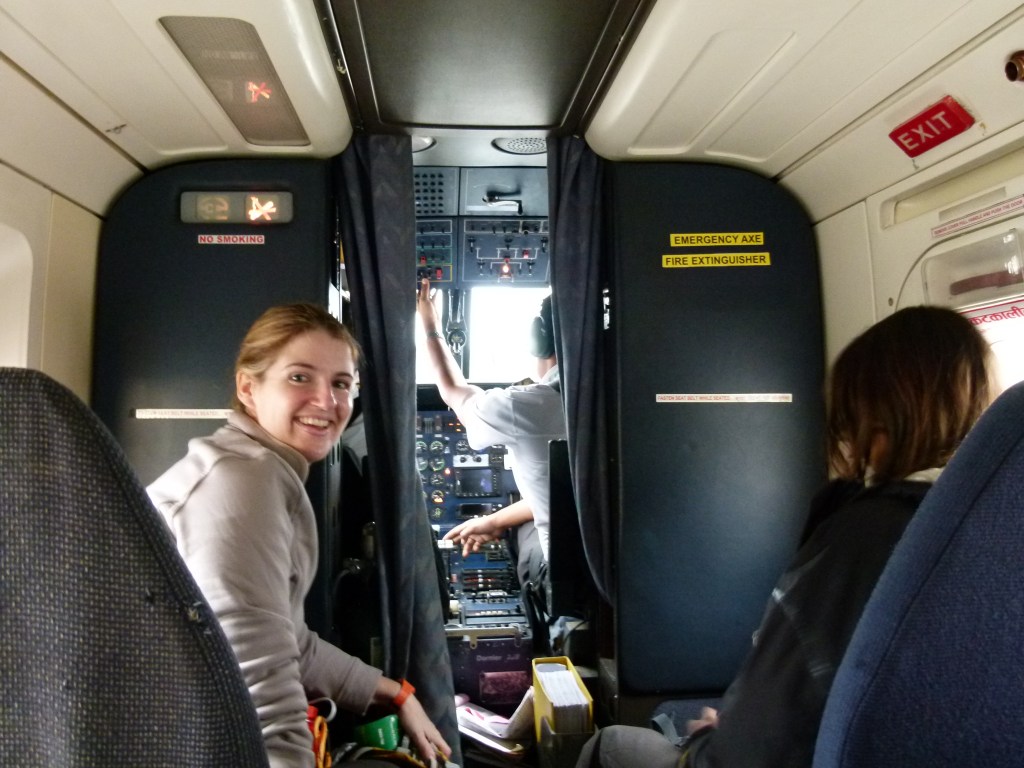
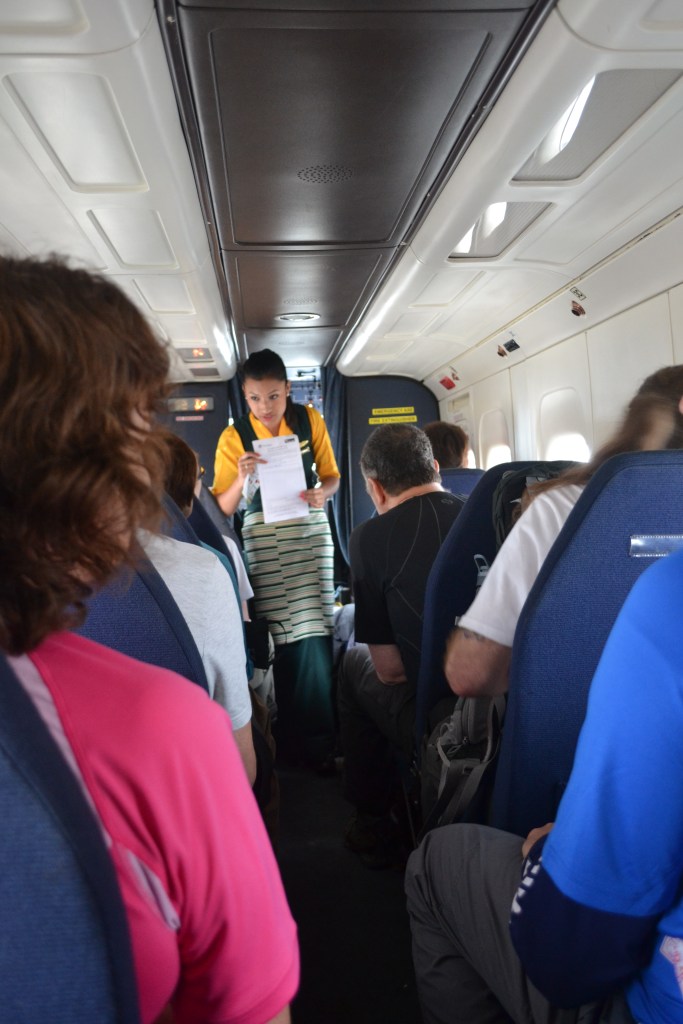
We also discovered why our leader wasn’t with us. There was only room on the plane for 13 of us plus the (very small) stewardess. We felt a bit bad about this – she probably had to be so small to compensate for the extra kilos of Mars bars we had smuggled on board. Our leader would (hopefully) follow on the next flight. The safety briefing was unintelligible – which was a shame- as it was probably the most important safety briefing I have ever had on an aircraft.
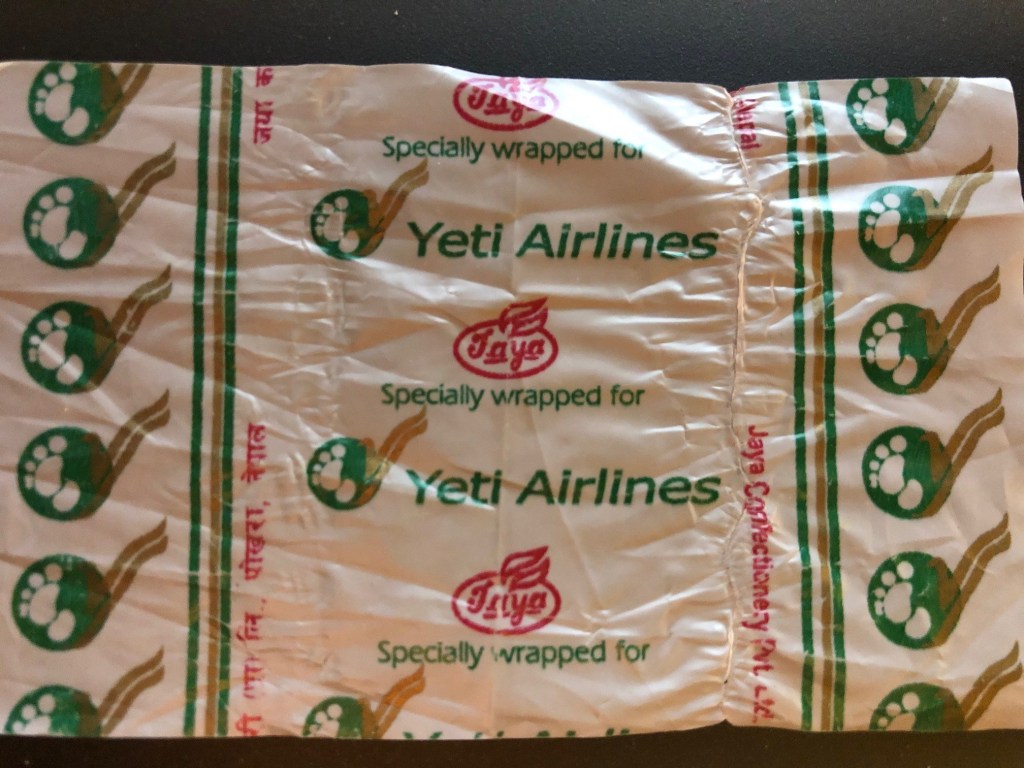
The stewardess then served our in-flight meal – a sweet wrapped in the company logo and we were off.
As usual smarty-pants Andy Loakes had done some research and knew the left hand side of the plane offered the best views of the Himalaya. Our flight was about 40 minutes and we did start to see snow-clad mountains in the distance. But we were still very nervous as we knew it was quite common to turn around mid-flight and return to Kathmandu if the weather closed in at our destination.
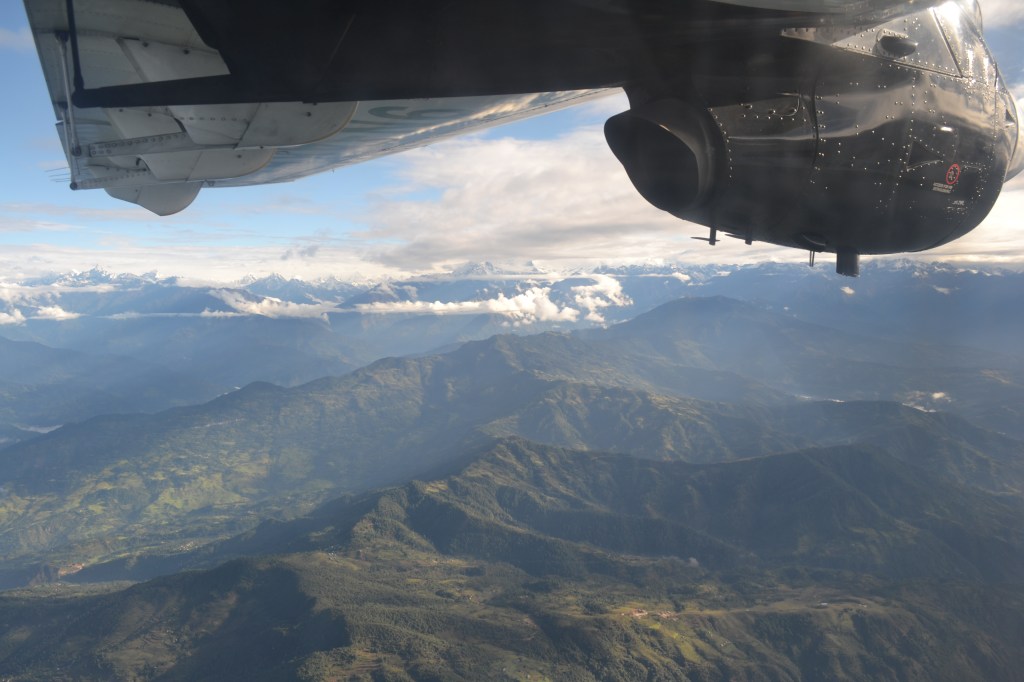
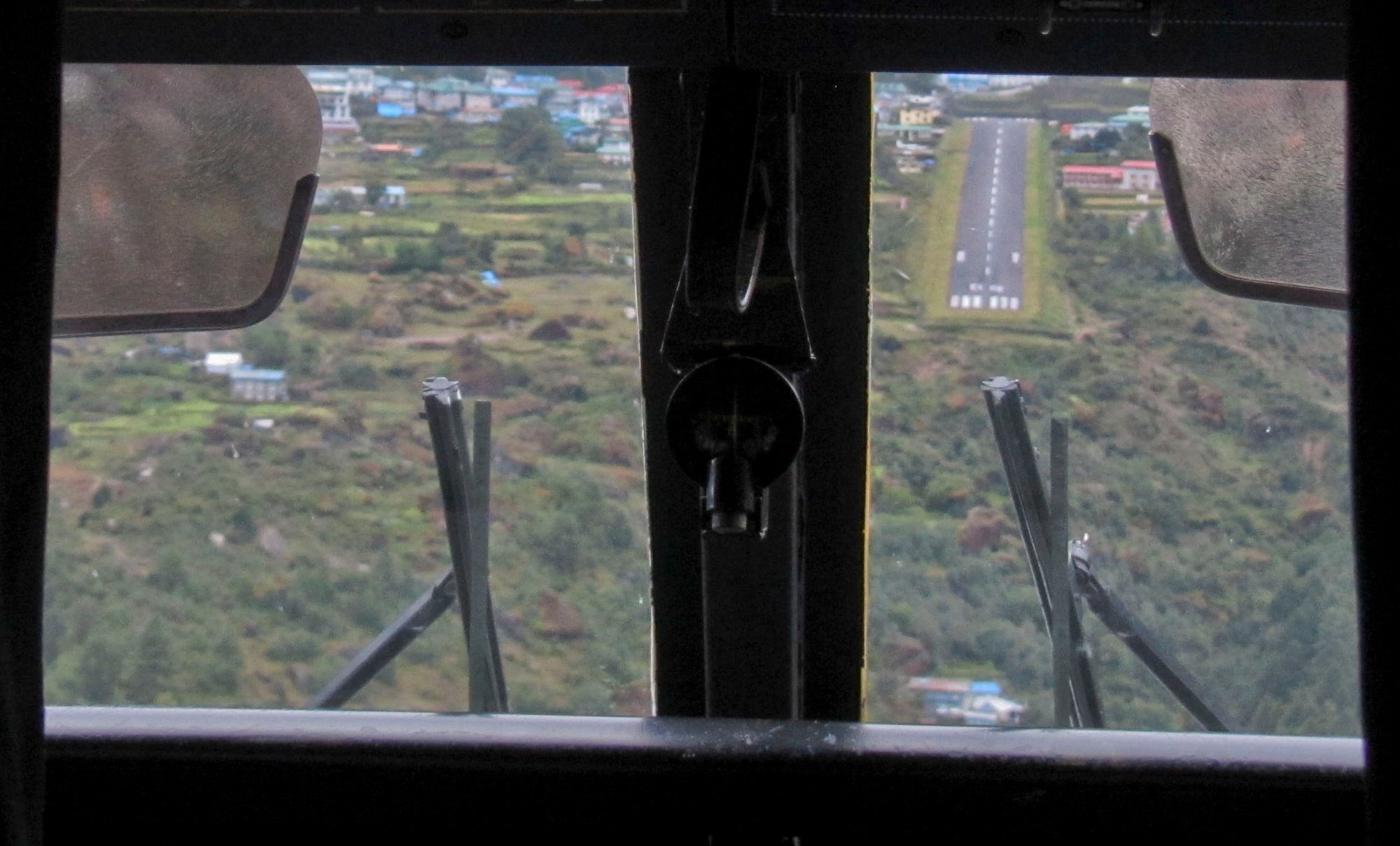
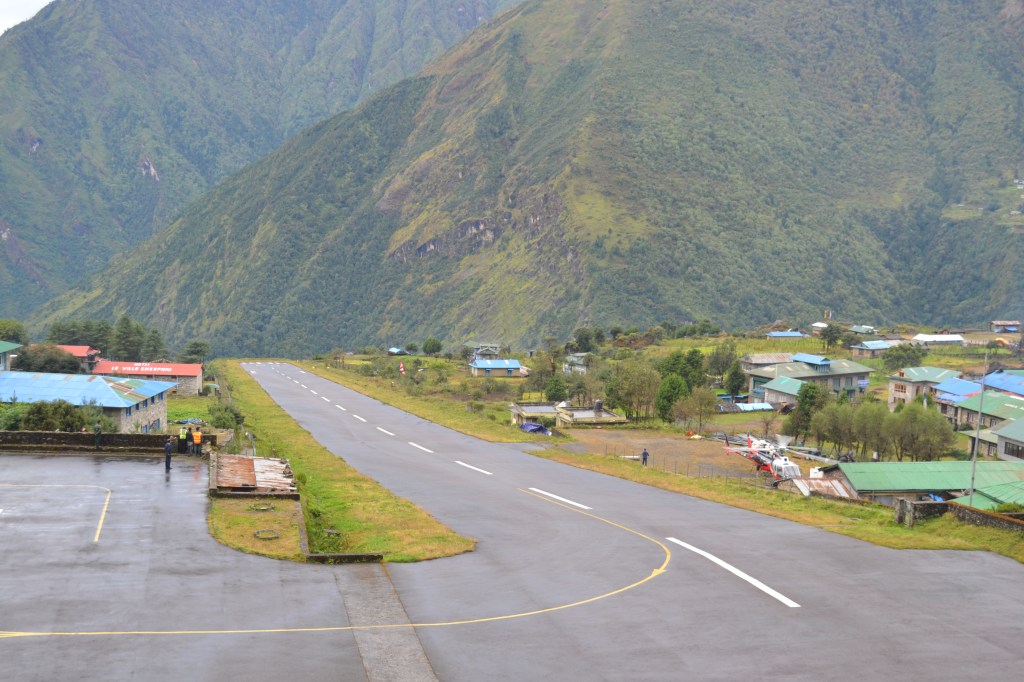
So, it was with mounting excitement that we finally saw Tenzing-Hillary airport in the distance. The fact we could see it meant it wasn’t shrouded in cloud. It also meant the pilot could see it clearly, which we were very thankful for. It really is something. The runway is 527m long and, unusually, has about a 11% gradient.
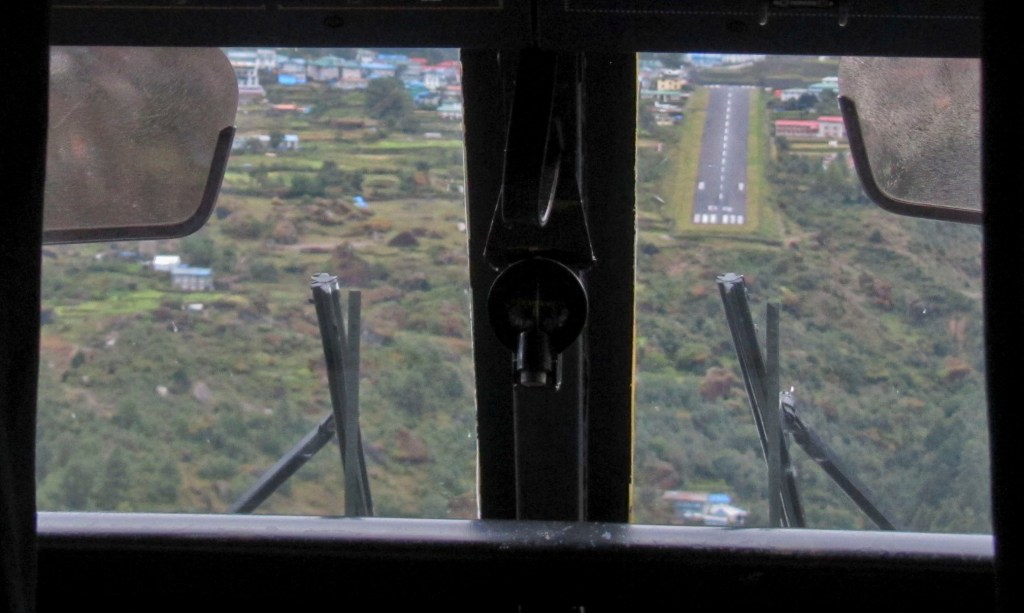
Our expert pilot put it down with no problems and our smiles finally appeared. Whatever happened now (as long as our leader turned-up) we were going to do the trek. We might be delayed on the way back out, but we didn’t care about that.
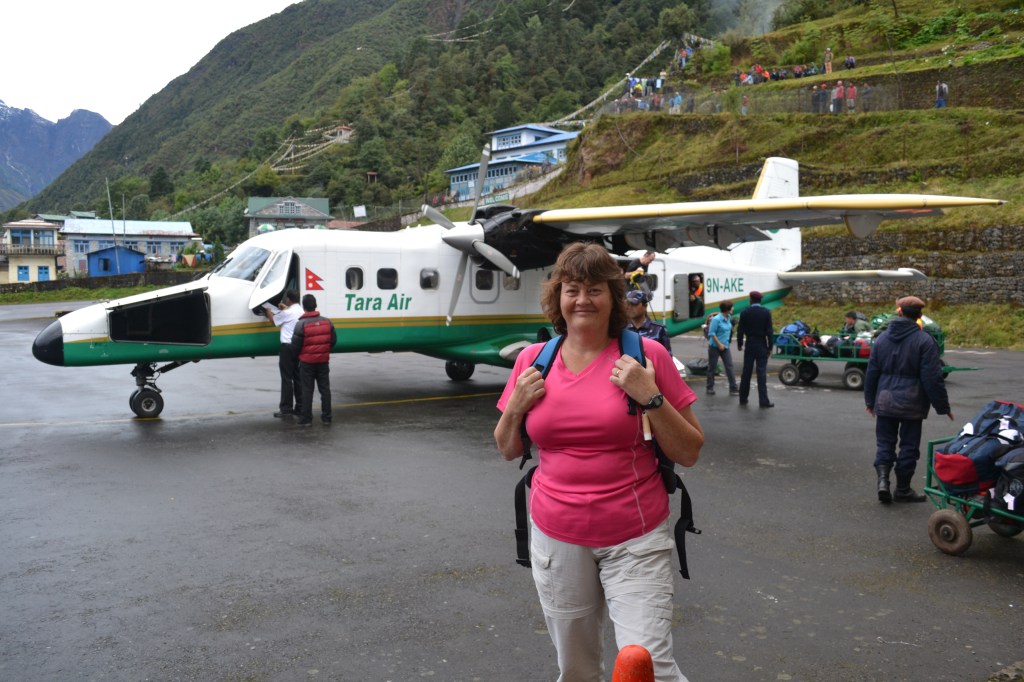
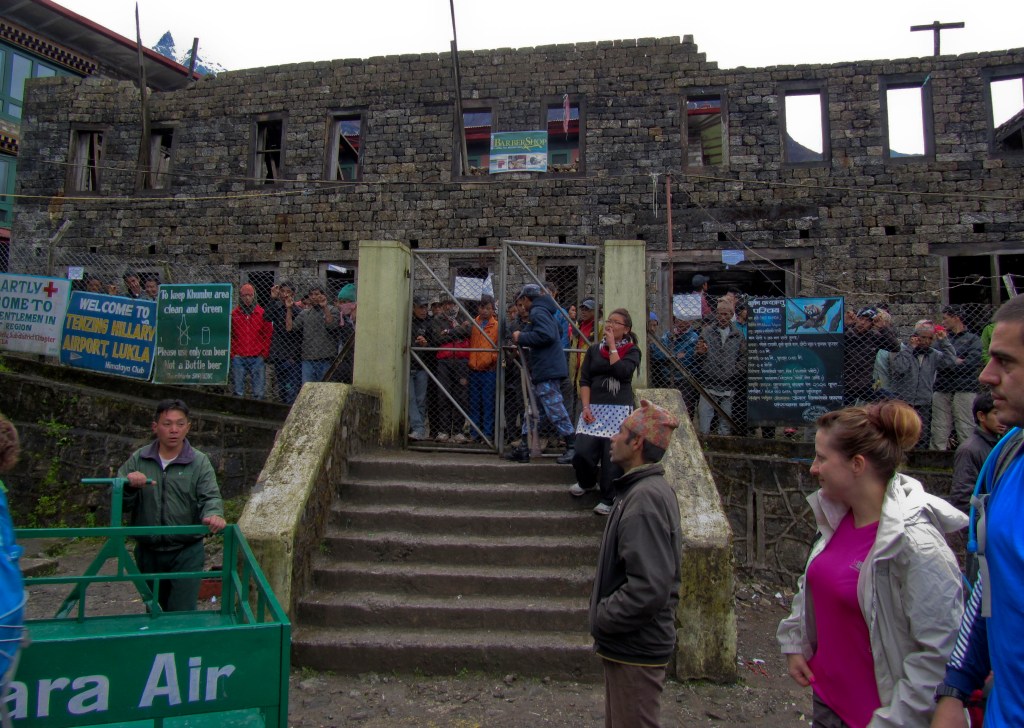
Surrounding the airport is a chain link fence and the comings-and goings are a great spectator sport. This is where the sherpa guides tout their business – they will offer their services to any passengers who do not already have guides.
The plane’s engines stopped and then suddenly it was quiet. It was very quiet. This was the quietest it had been for a week. Lukla has one road, but no cars. The nearest proper road is a 6 day trek away. Or at least it was – at time of writing a road is being constructed right into Lukla which will allow many more trekkers to experience this part of the world. That’s progress. I wonder how much it will change the place?
It was about lunchtime and we went off to a local hotel to meet our porters (and yaks) and wait for our leader to turn up. He did turn up about 30 minutes later with a beaming smile and a “I knew everything would be all right” attitude. His name was Ngima and we all came to like him – a lot.
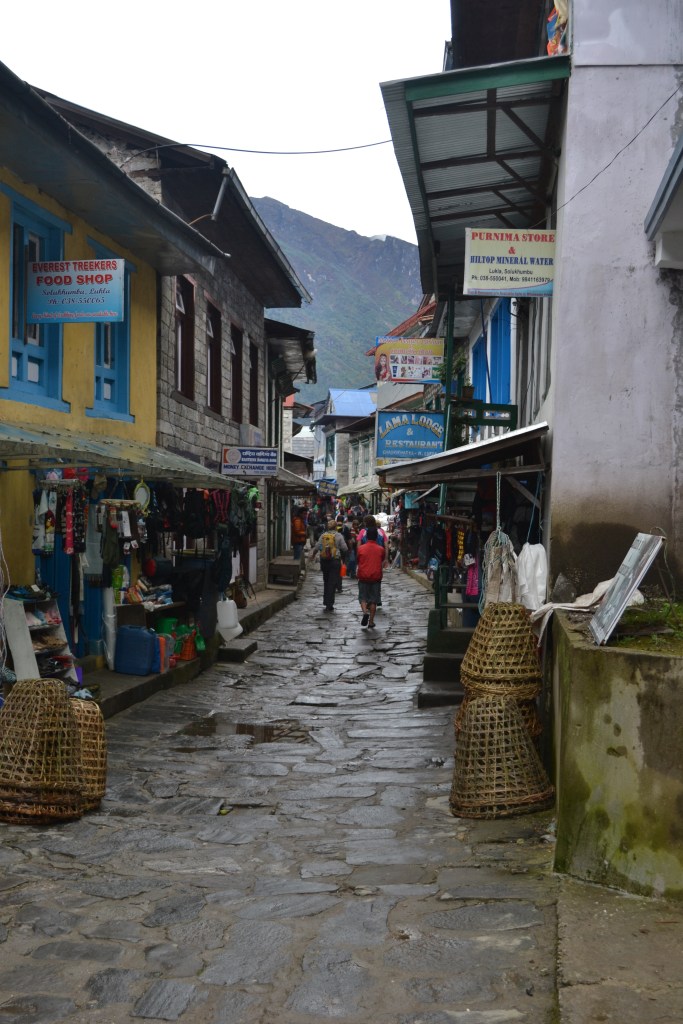
And so we started walking. Lukla lies at about 2860m (9400ft) and therefore, although this was about as high as we had ever been, the walking was very pleasant – no sign of altitude sickness today. It was not cold and I asked if shorts were acceptable and was told they were.
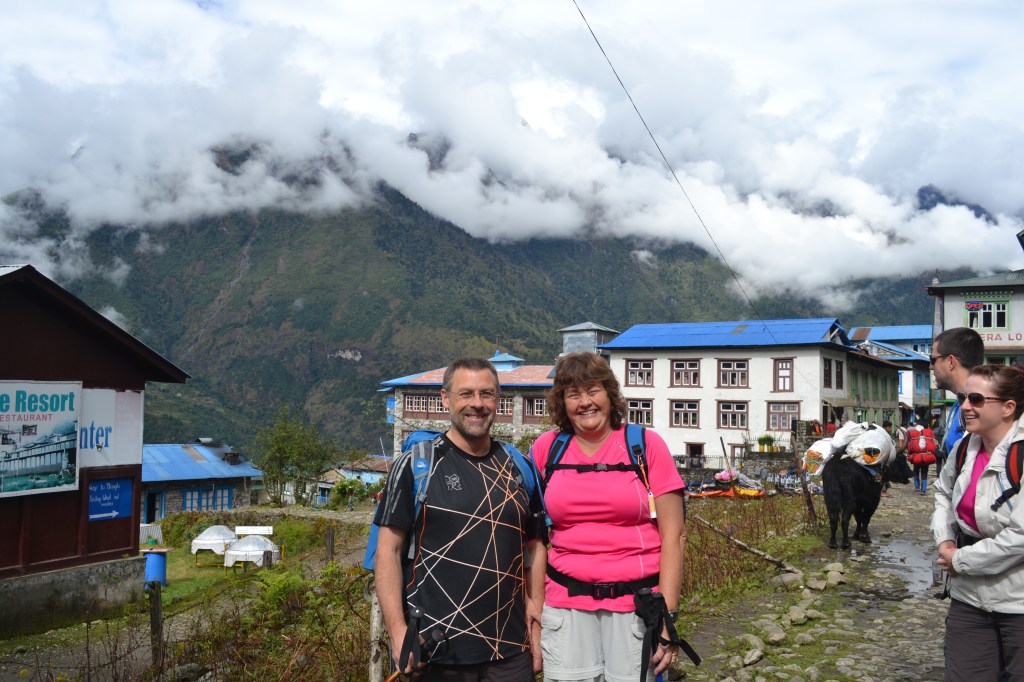
Off we went. After a few minutes we passed our first prayer stone – keeping it on our right as we had learned in Kathmandu.
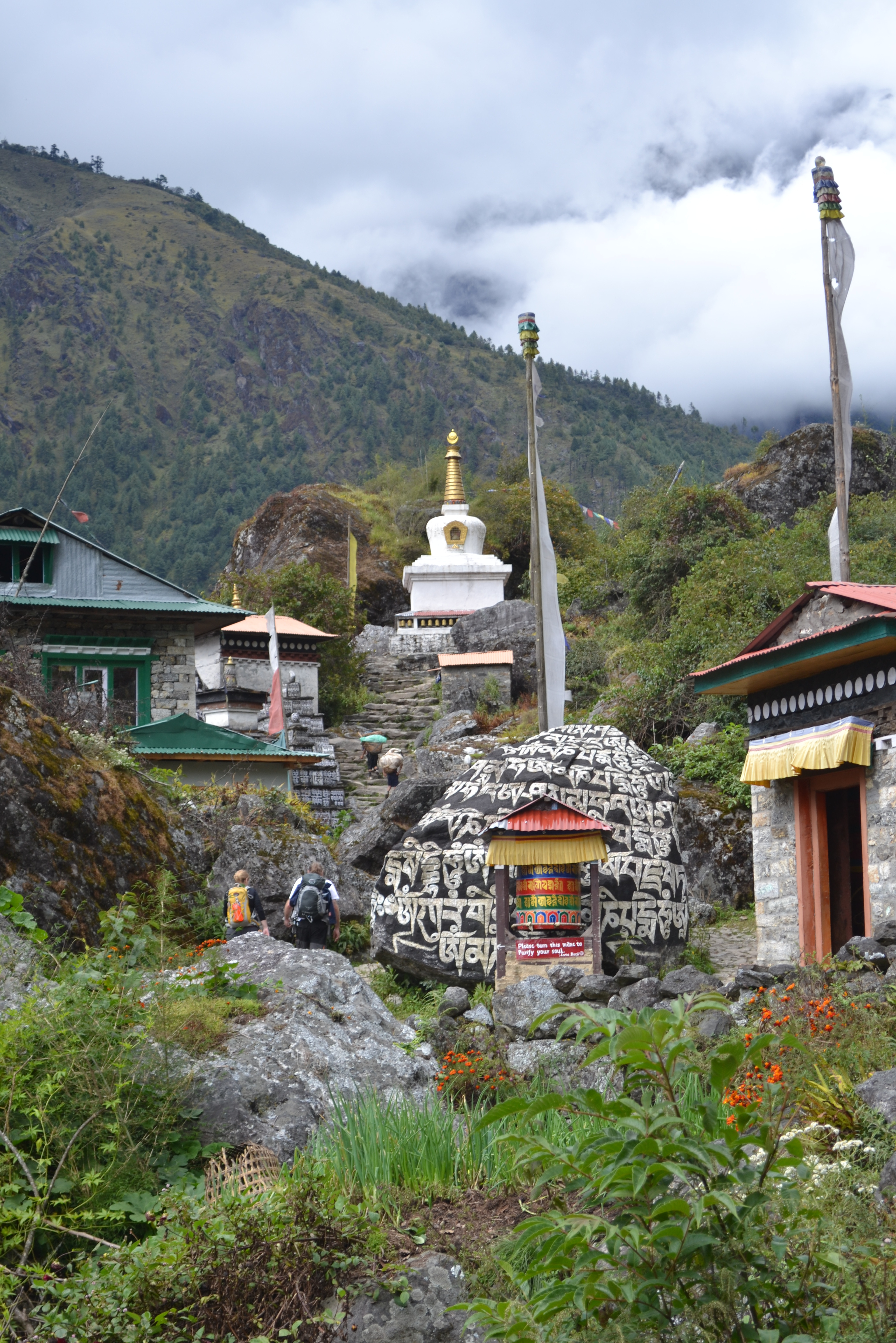
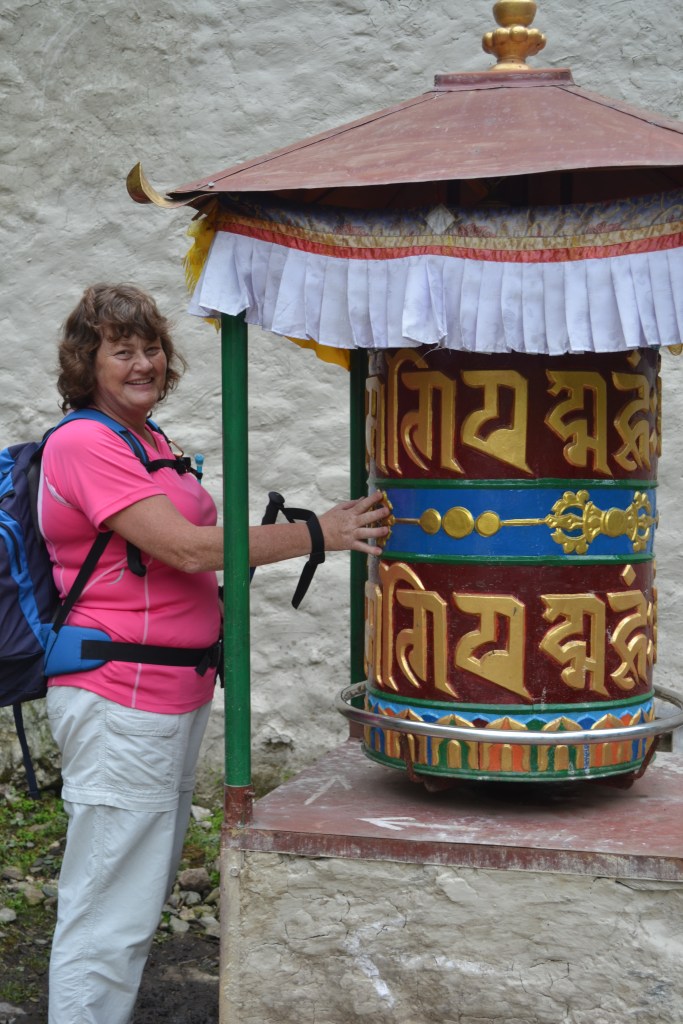
We also found the first of a thousand prayer-wheels we were to see in the coming days. One revolution of the wheel releases many thousands of prayers into the air. A clever time-saving device. They came in all shapes and sizes and we enjoyed giving them a turn as we passed by.
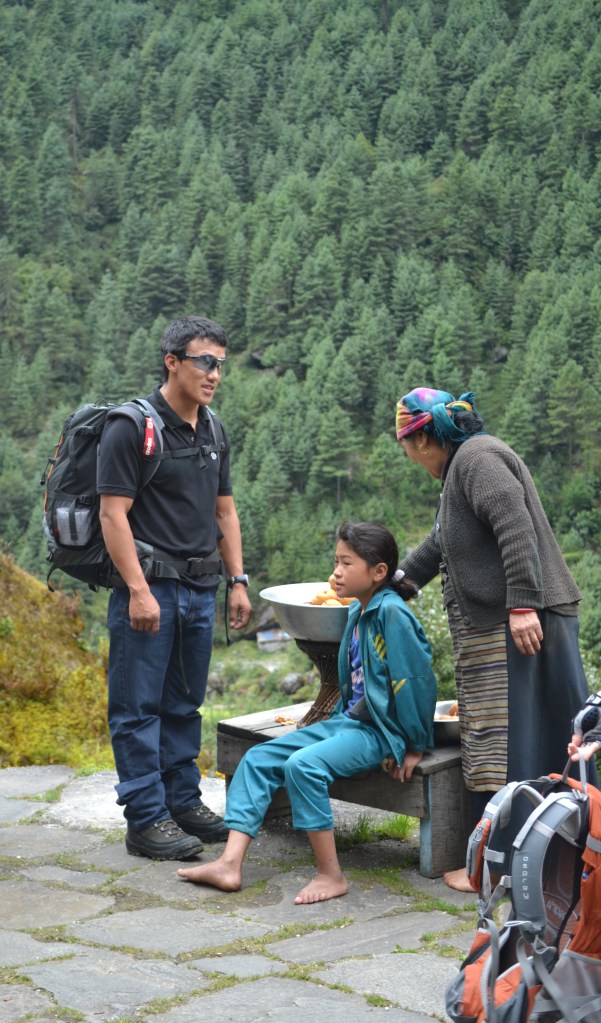
Here’s Ngima chatting with a traditionally clothed Tibetan woman (stripy apron). He had a much bigger rucksack than the rest of us.
Our destination for day 1 was the village of Phakding – about a 3 hour walk from Lukla. Its altitude is 2610m, so about 900ft lower down than Lukla. This was one of the guiding principles of our trek. “Walk high – sleep low”. To aid acclimatisation our night-time accommodation was always at a lower altitude than that day’s walk.
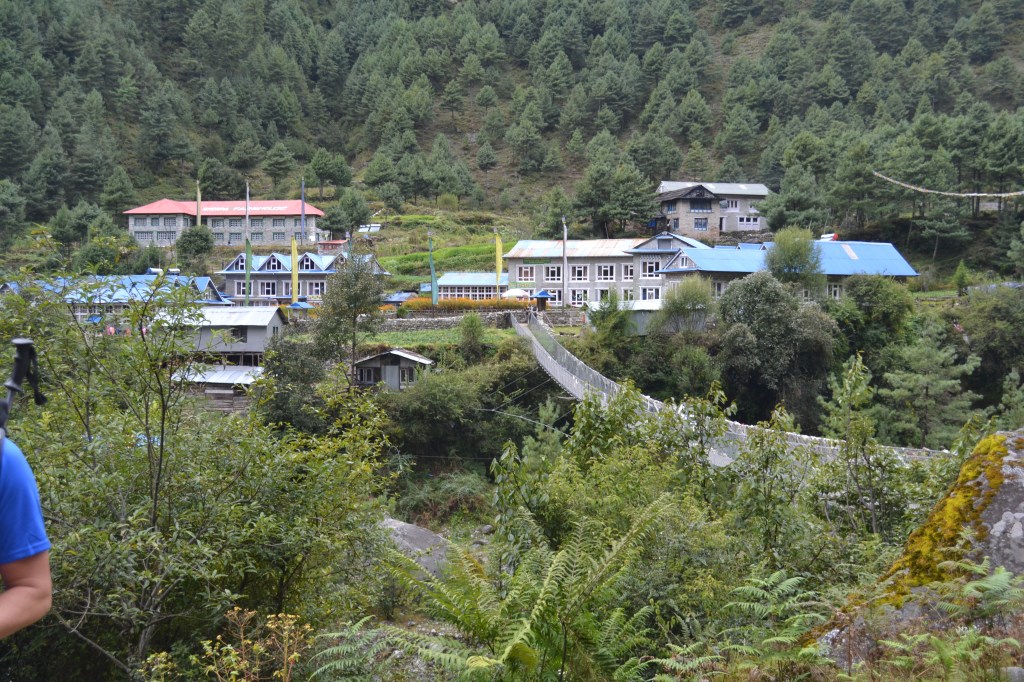
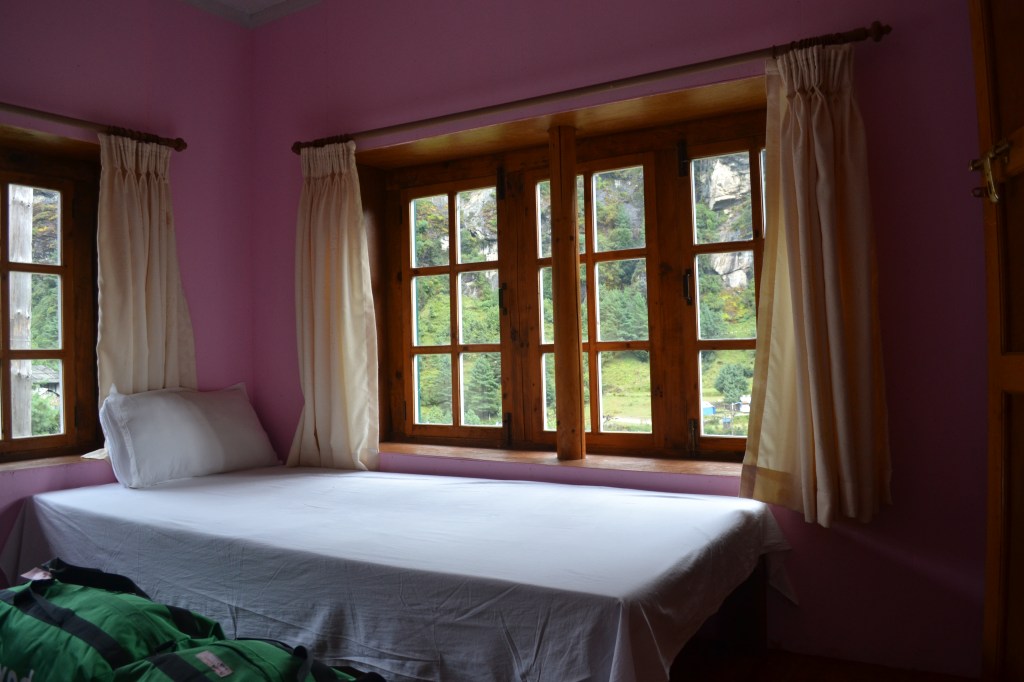
We crossed out first ‘scary bridge’ which was not too bad and arrived at our first night’s accommodation. We arrived in good spirits and were impressed to find our bags already in our rooms – the yaks had set off while we were lunching in Lukla. The room was basic but had a lovely view over the stream. After the emotional roller-coaster of a day we slept soundly.
 Everest Base Camp 2013