Day 5 of the trek – and by now we were getting into the swing of it.
7:30am – tea in bed
8:00am – breakfast
9:30am – plod plod
12:30pm – lunch
2:00pm – plod plod
5:00pm – arrive at destination
7:00pm – eat
9:00pm – bed
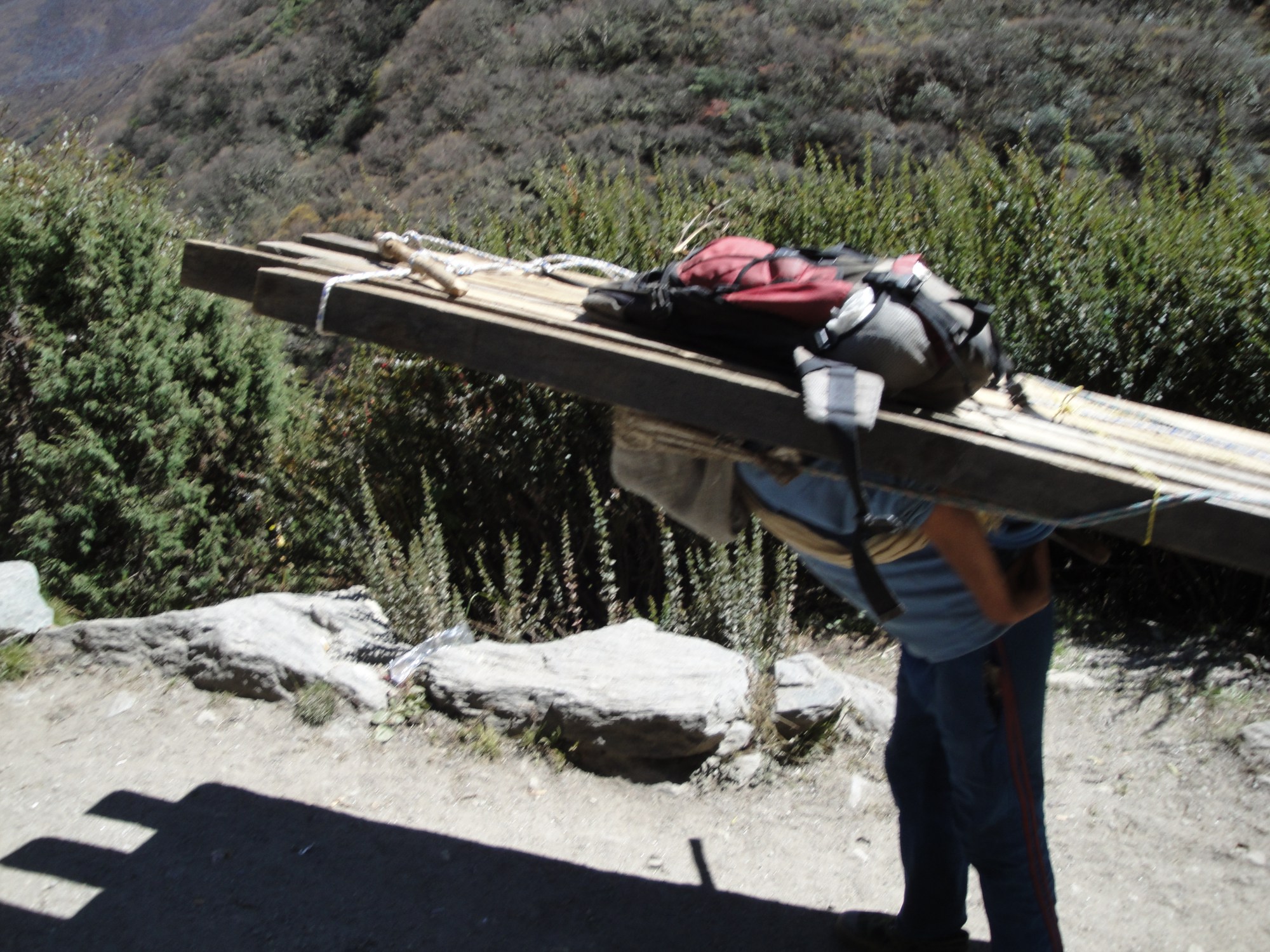
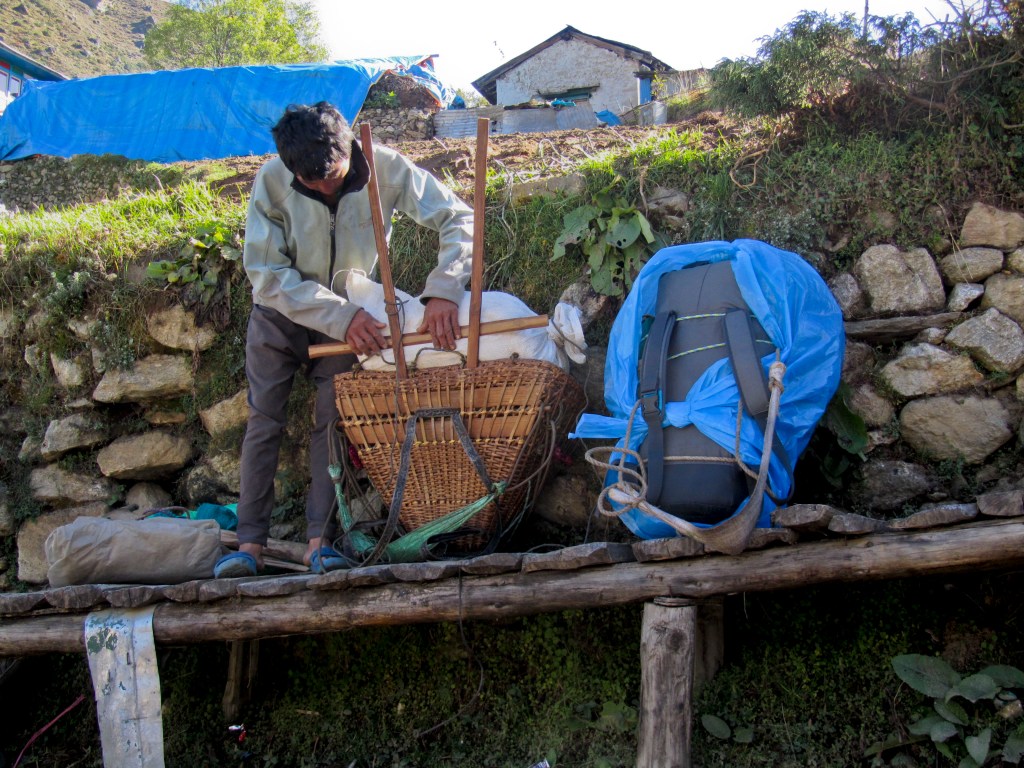
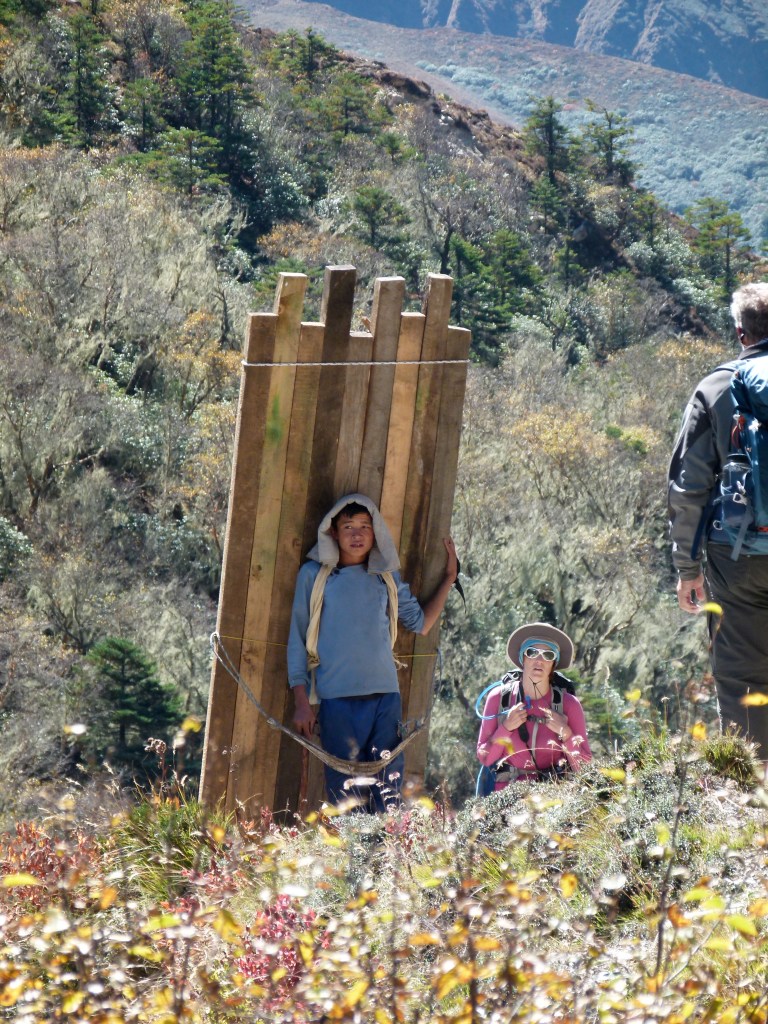
We also started to understand the economics of trekking in this part of the world. There’s a fascinating supply-chain PhD thesis just waiting to be written here. This is because everything, but everything, in this remote valley leading up to the foot of Everest is carried in on either an animal’s or a human back. There are no roads, and air freight is out of the question. Every building we stayed in, every toilet we sat on (surprisingly every tea house we stayed in had a sitty-down toilet – nice), and nearly everything we ate had been portered in. All day long there was a steady stream of porters, some of whom were very young, on the trail. They were not necessarily walking faster than we were, but they seemed to never stop and, of course, they were carrying far far more than we were. Here’s a typical example – we came up behind this bent-double porter who not only had nine enormous planks of wood strapped to his back, he also had his rucksack strapped to the planks.
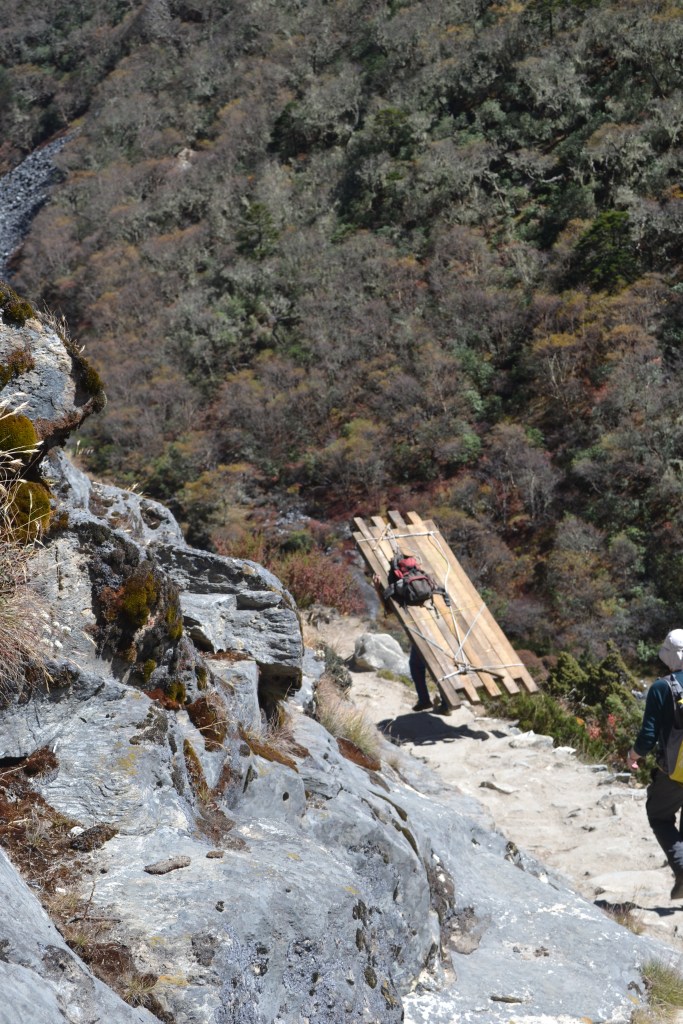
He did, understandably, stop for a rest and when he did he appeared to be about twelve years old.
The local economics was most evident in the menu we were presented with each night. As we got higher, the menu got simpler and each dish got more expensive. Anything with meat was significantly pricier than vegetarian options. Just about every night Mary and I had Dal Bhat or veg fried rice. It was good.
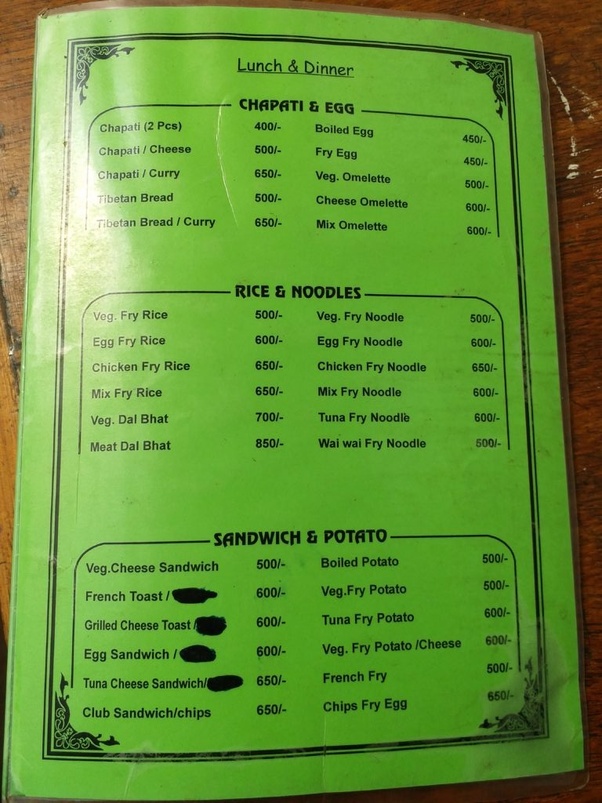
The most expensive thing on any menu was usually the Yak Burger or Yak Steak. I think I had one of these, but was happy to go back to fried rice. Meat still seemed to be a gastro-intestinal gamble.
And do you remember that stash of Mars bars we had smuggled in our overweight bags? Well, each night we treated ourselves to one of them. Mars bars, and some other branded chocolates, were available but were really expensive, so we’re glad we brought our own. Another thing we could have paid for, but didn’t, was WiFi. Back in 2013 it was available at about £2 for an hour if I remember correctly. But we were quite happy to be off grid. Phone reception was patchy, but we didn’t use our phones anyway. I bet this has changed a lot in the last 7 years. Facebook demands to be updated on a nightly basis for trips like this.
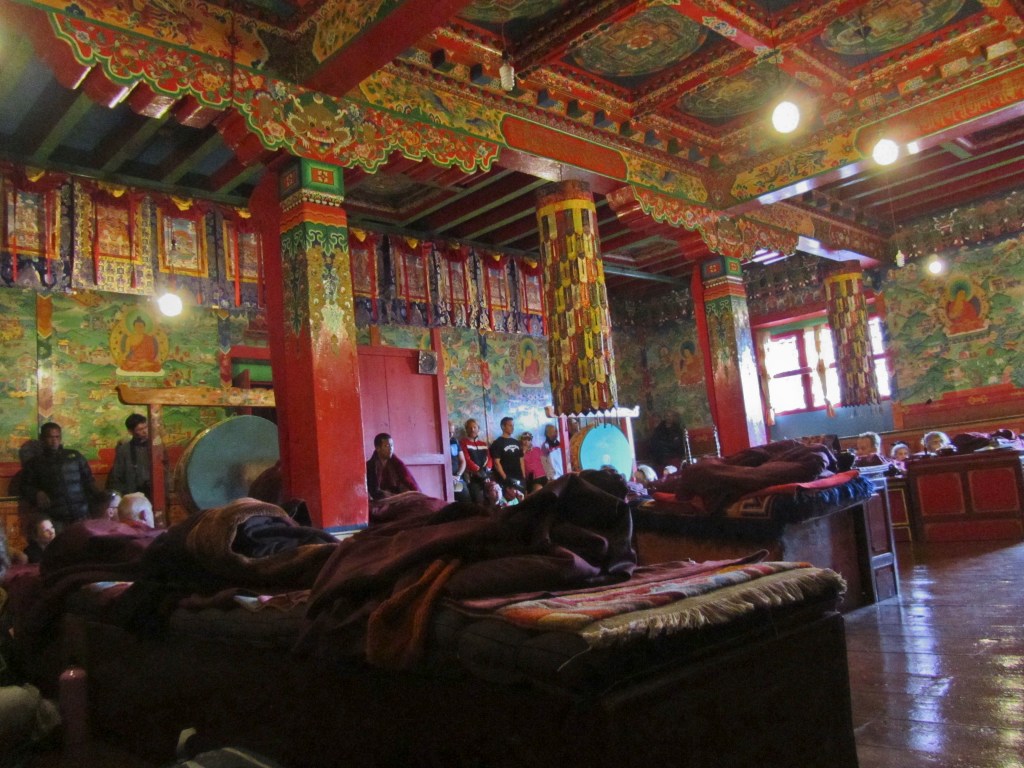
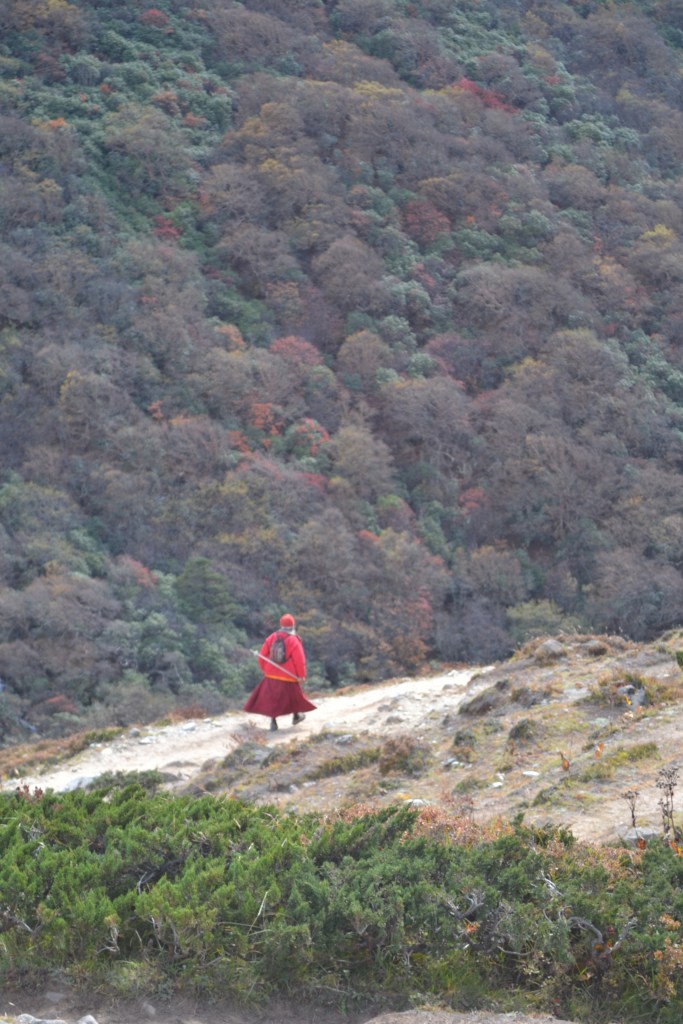
We started this day with prayers in Tengboche monastery. My overriding recollection of this was smelly feet. This is because about 50 trekkers gathered in the monastery to watch the daily morning service. But all 50 trekkers also took off their boots to do so. No wonder Buddhist ceremonies call for so much incense. It was a good experience though.
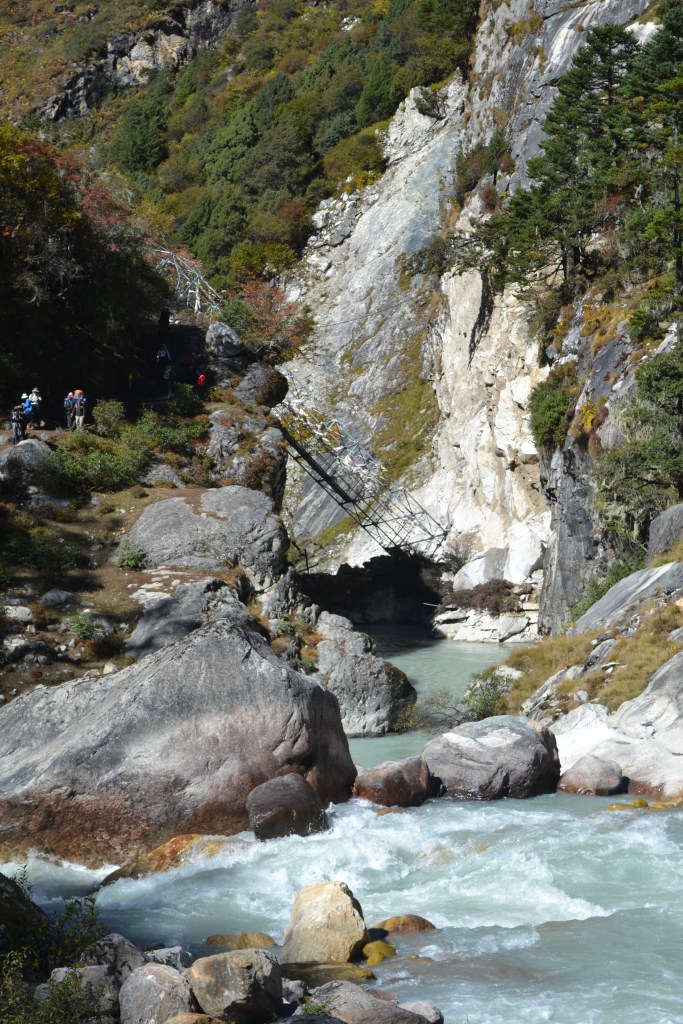
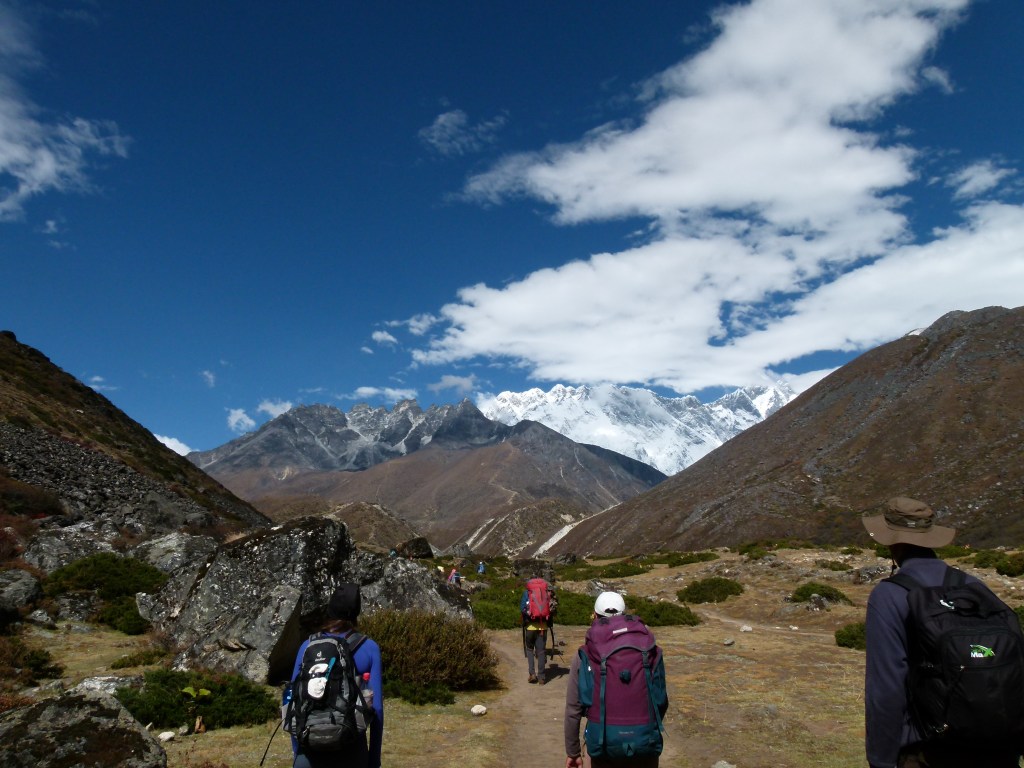
Today was the day we finally left the trees behind and climbed into a much more sparse vegetation. We also got constant reminders of just how volatile nature is up here. The Himalayas are moving all the time, Everest is still growing. Here we passed a bridge that was in use the previous season, but had now toppled into the gorge. A new bridge had been hastily constructed a little upstream. The trail must be maintained at all costs for the rupee-rich tourists. Not to mention the proper mountaineers who use this same route to get to the highest peaks.
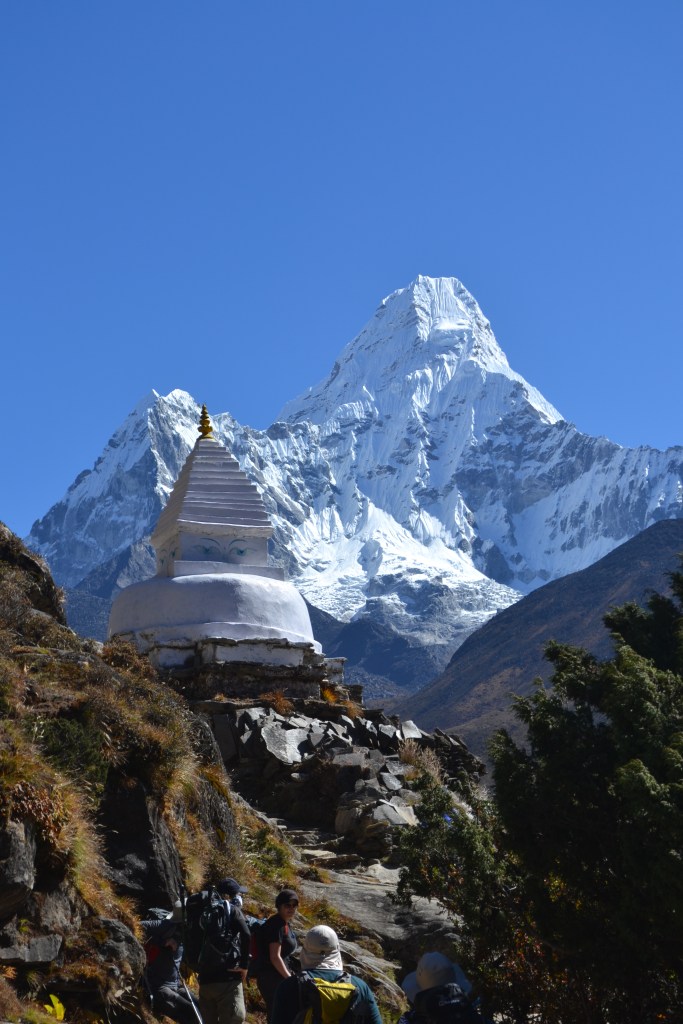
This was a very photogenic part of today’s trek. Ama Dablam towering above a Chorten. Back at the school in Khumjung we had spoken to the art teacher who sold his paintings to raise funds for the school. We had bought this view (we left it at a tea-house to collect on the way down) and it now hangs on our staircase at home.
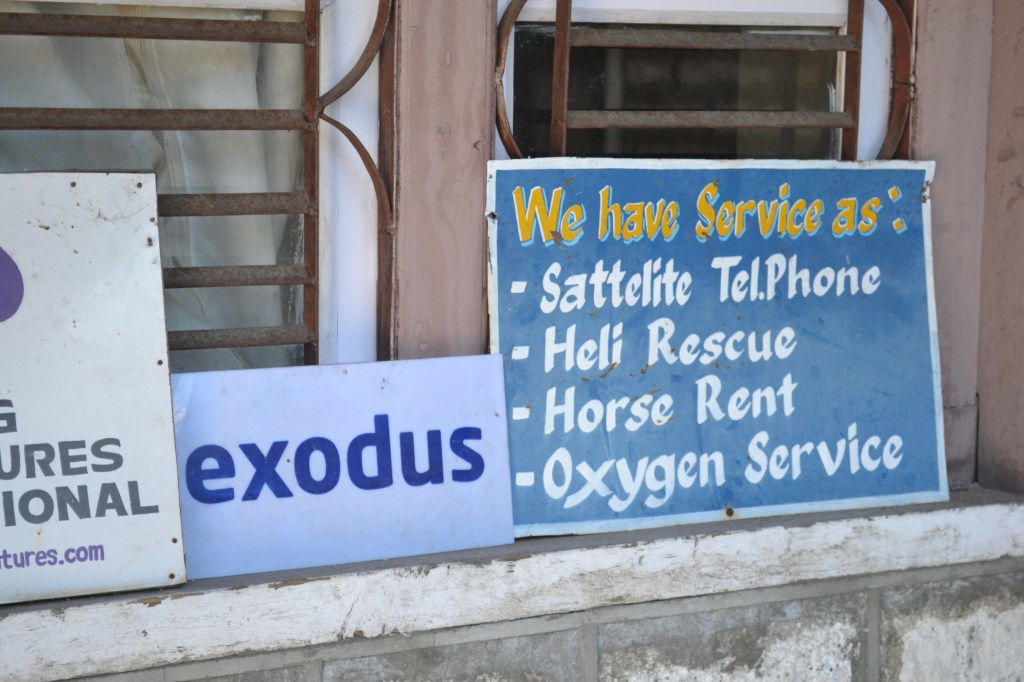
Maybe 5 or 6 times a day a helicopter would pass far below us in the valley going up towards the higher altitudes. It was curious looking down on the top of a helicopter. Flying helicopters at this altitude is a challenge so they hugged the valley floor as much as possible until they finally had to ascend to their destination. They were probably evacuating people suffering from altitude sickness. The price of a helicopter rescue and transfer back down to Lukla was exhorbitant and was the main reason we had such comprehensive insurance.
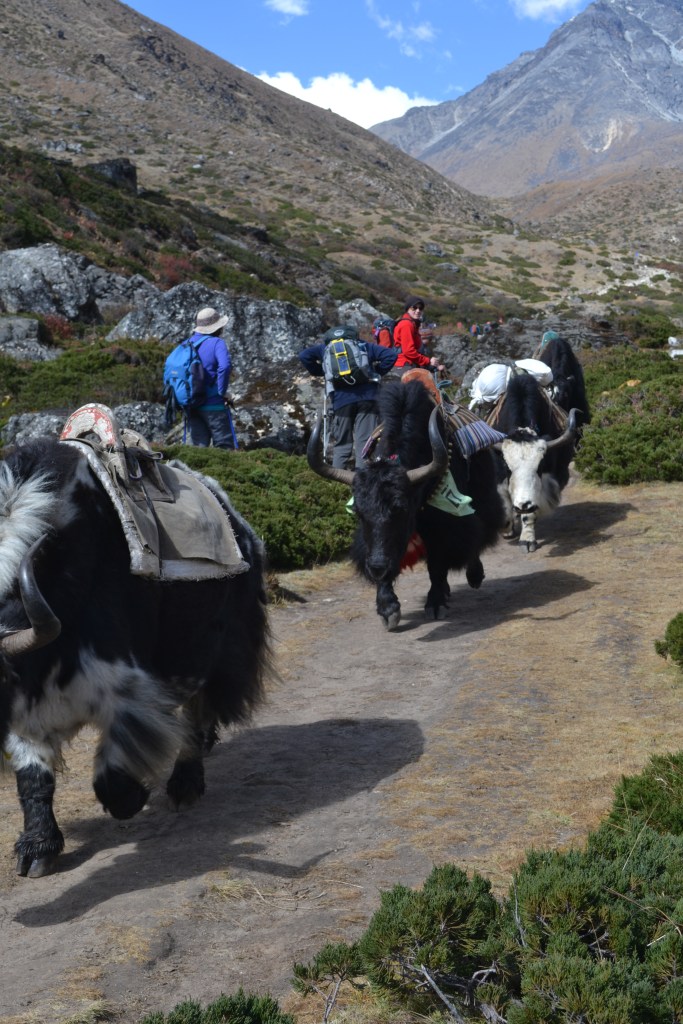
Yaks generally had right of way. They are plodders but you do not mess with them. They are in no way vicious, but clumsily they could certainly knock you off a path with their impressive horns. They all had bells and so we could hear them coming.
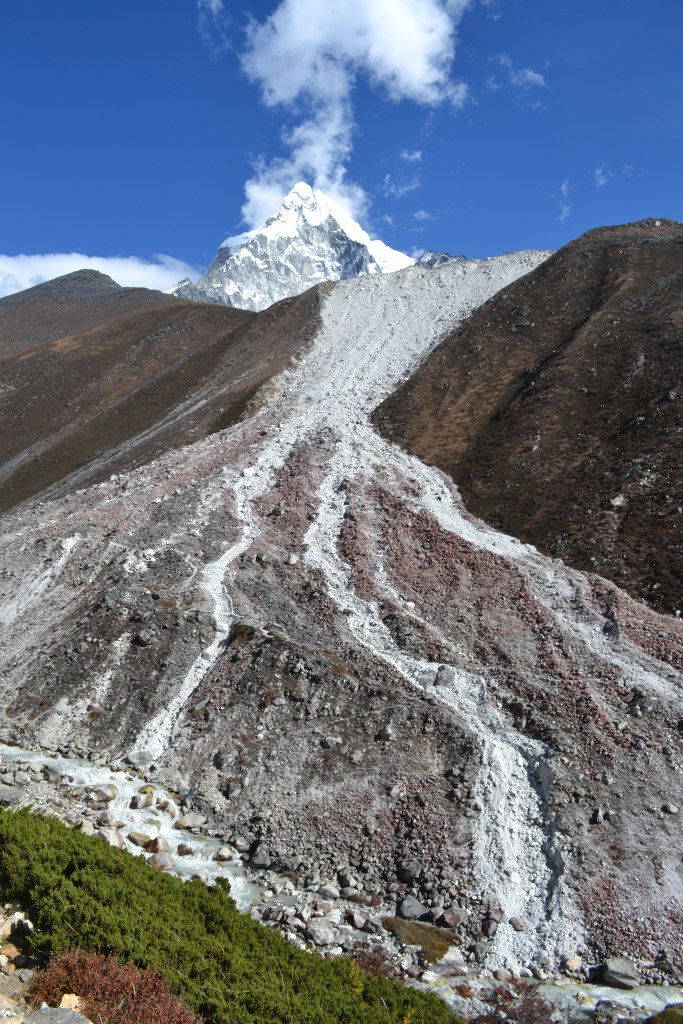
This appeared to be a quite recent landslide – it would have been impressive to see it in action.
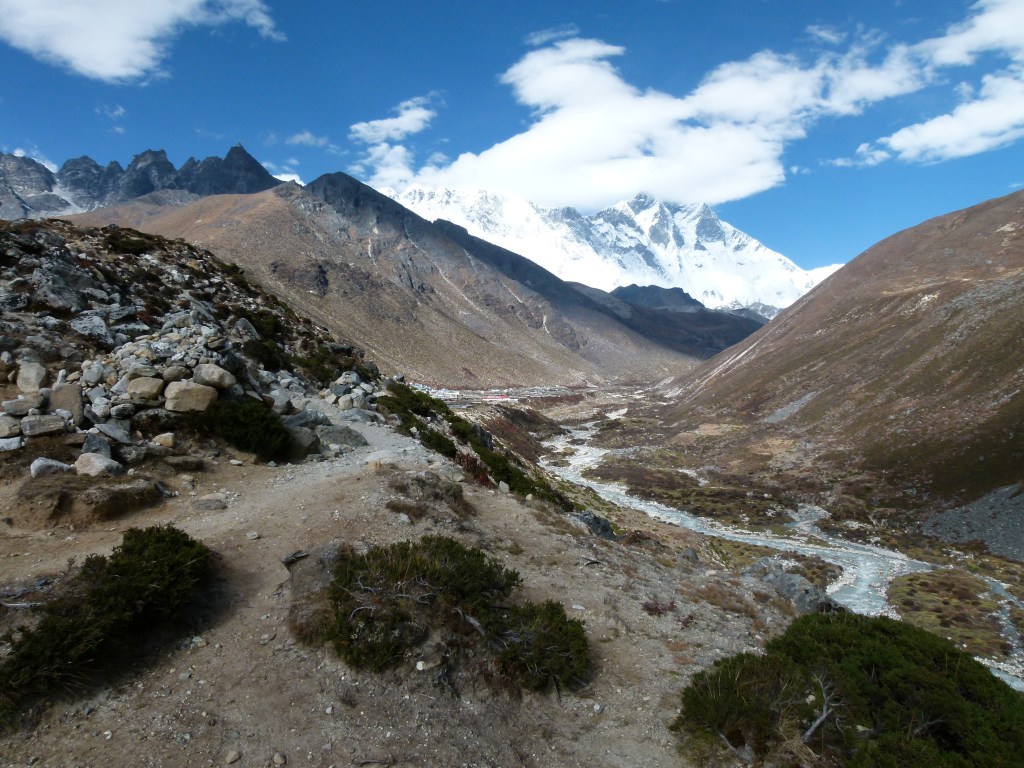
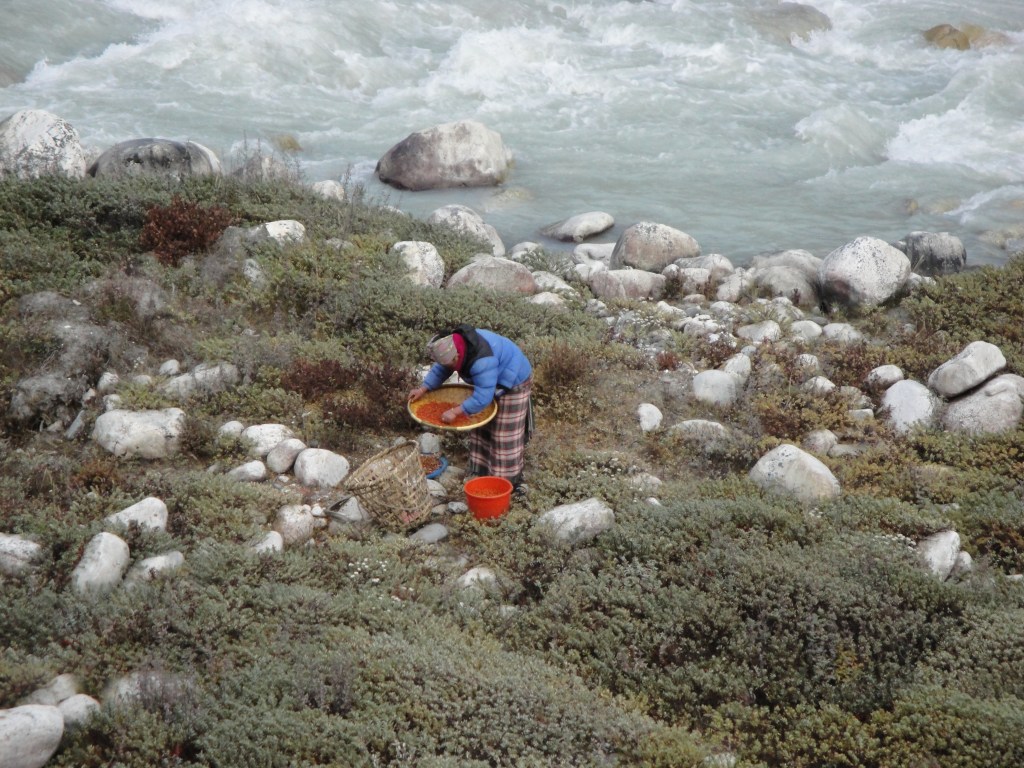
Our destination for the night was the village of Dingboche (4410m, 14470ft). The locals cultivate the sea-buckthorn bush which is planted to prevent erosion and can tolerate the altitude and cold. Recently they discovered that weird western trekkers also would buy the juice from its berries at wildly inflated prices. It has twelve times more vitamin C than oranges and has lots of antioxidants which we just love. So, on arrival at Dingboche, rather than having my usual hot mango drink I had a glass of rejuvenating sea-buckthorn juice.
 Everest Base Camp 2013